1963 Chevrolet Corvette
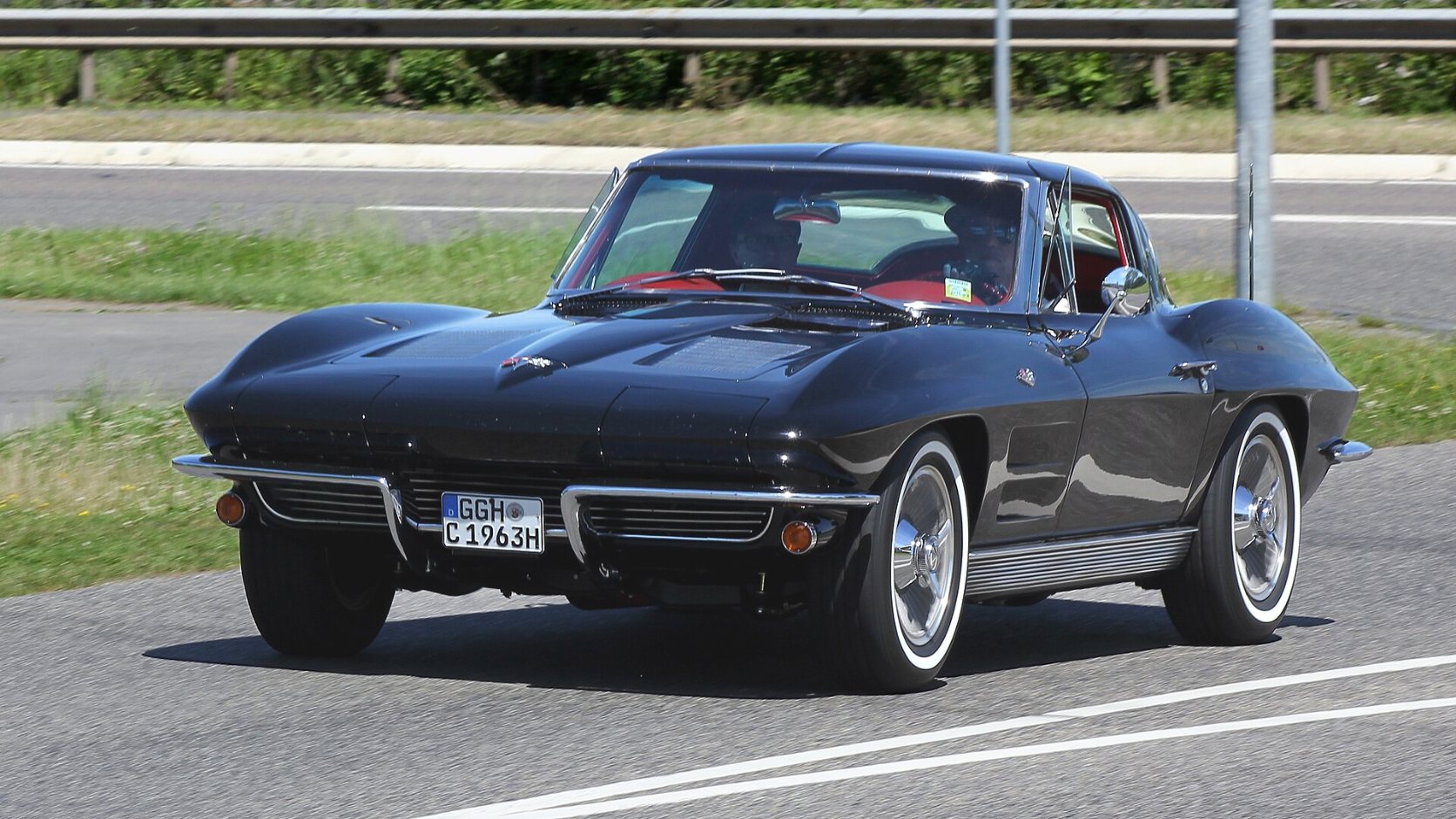
The 1963 Chevrolet Corvette Sting Ray introduced the C2 generation and the one-year-only split-window coupe.
 1 / 6
1963 Chevrolet Corvette Sting Ray Coupe. Photo: Lothar Spurzem via Wikimedia Commons, CC BY-SA 2.0 de.
Overview
The 1963 Chevrolet Corvette Sting Ray was the first year of the second-generation (C2) Corvette and one of the most important American sports cars ever built. It introduced an all-new body, a new chassis and, for the first time, a fixed-roof coupe alongside the convertible.
The coupe is famous for its split rear window, a styling feature used for 1963 only. The design came from GM styling chief Bill Mitchell’s studio, with Larry Shinoda credited for much of the shape, and it added hidden rotating headlights that stayed a Corvette trademark for decades.
Under the fiberglass body, engineer Zora Arkus-Duntov’s team gave the Sting Ray independent rear suspension, a shorter 98-inch wheelbase and better weight balance. All four engines were versions of the 327 cubic-inch small-block V8, from 250 horsepower up to the 360-horsepower fuel-injected unit. The Z06 package, ordered on just 199 cars, added heavy-duty brakes and suspension for racing.
Production nearly matched demand at 21,513 cars, split almost evenly between coupe and convertible. Like the 1965 Ford Mustang that followed two years later, the 1963 Sting Ray became a landmark of 1960s American car design.
1963 Corvette timeline
- 1961Earlier development
- 1962Previous model year
- 1963Featured model year
- 1964Continued evolution
Engine options
| Engine | Type | Horsepower | Torque | Fuel / induction | Notes |
|---|---|---|---|---|---|
| 327 (base) | V8 | 250 hp | 350 lb-ft | 4-barrel carburetor | Standard engine |
| 327 (L75) | V8 | 300 hp | 360 lb-ft | 4-barrel carburetor | Optional |
| 327 (L76) | V8 | 340 hp | 344 lb-ft | 4-barrel carburetor | Solid lifters |
| 327 (L84) | V8 | 360 hp | 352 lb-ft | Rochester mechanical fuel injection | Top engine; required with Z06 |
Specifications at a glance
Production
- Convertible10,919 (50.8%)
- Coupe10,594 (49.2%)
Dimensions
Original colors
Color research in progress.
Performance
Buyer’s guide highlights
- Inspect the steel frame and the steel "birdcage" around the cabin for rust, which is costly to repair.
- Check the fiberglass body for cracks, poor panel fit and signs of accident repair.
- Confirm a real split-window coupe; some were modified to a one-piece window and some later cars have been converted.
- Verify matching-numbers engine, fuel injection parts and Z06 claims with documentation.
- Check the independent rear suspension, trailing arms and brakes for wear.
- Buy on originality and paperwork, since values depend heavily on correct components.
1. Check the Frame and Birdcage
On any 1963 Chevrolet Corvette, the fiberglass body does not rust but the frame and the steel structure around the windshield and doors do. Look closely at the rear frame kick-ups and windshield pillars.
2. Inspect the Fiberglass
Look for stress cracks, mismatched panels, thick filler and bonding seams that show through, which point to old accident damage.
3. Authenticate the Split Window
The split-window coupe is the most valuable body style. Confirm the car is an original 1963 coupe with its original rear glass area, not a modified or converted car.
4. Verify the Drivetrain
Fuel-injected and Z06 cars are worth far more, so check engine stampings, the fuel injection unit and supporting paperwork carefully.
5. Buy the Best Example You Can
Correct restoration of a Sting Ray is expensive. A documented, largely original car is usually the better long-term buy.
Values
1963 Chevrolet Corvette values are led by Z06 and fuel-injected split-window coupes, followed by other coupes; convertibles with base engines are the most affordable way into a first-year Sting Ray.
Market references are research guides, not appraisals. Actual value depends on condition, originality, documentation, drivetrain, options, location and current buyer demand.