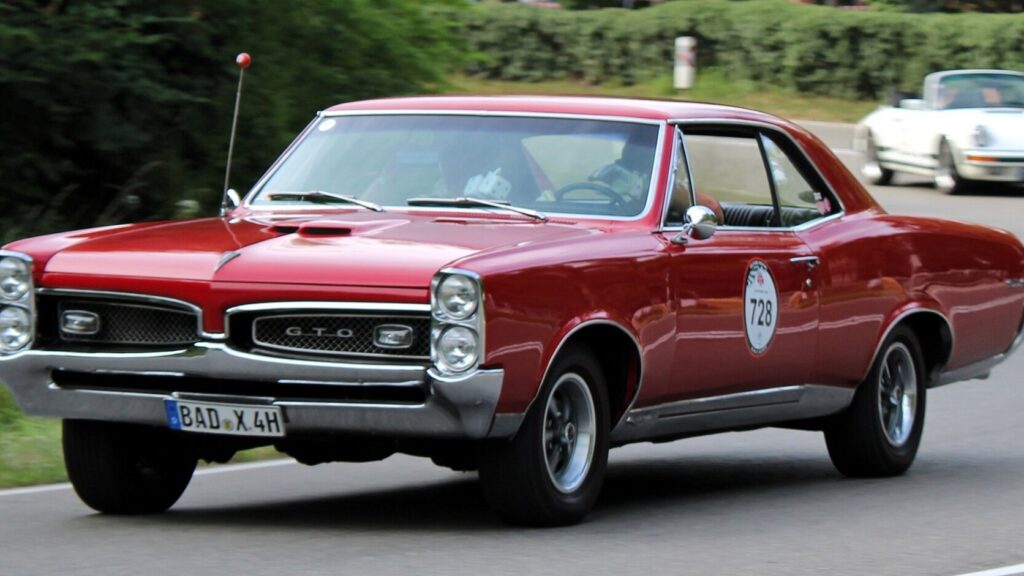
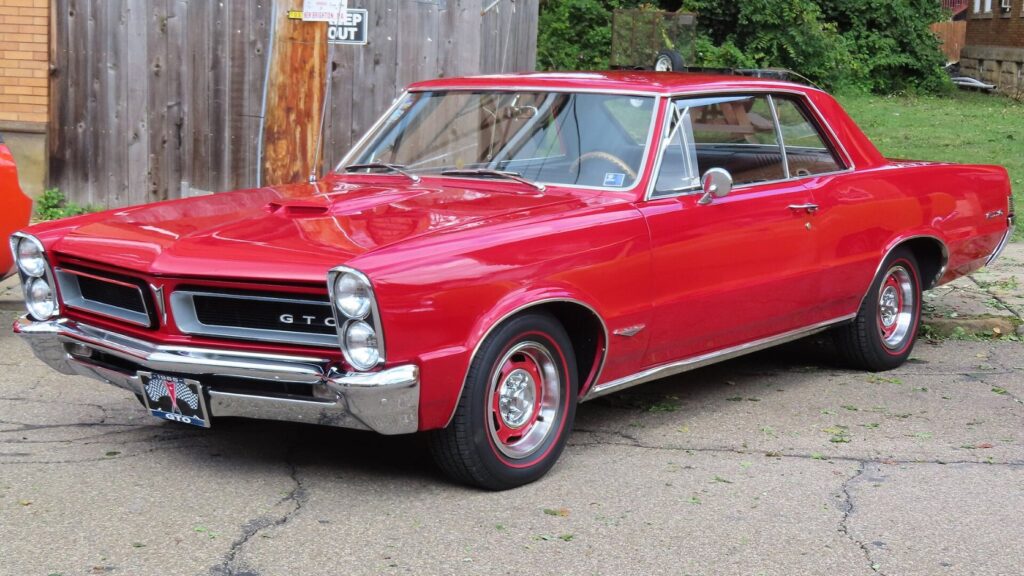
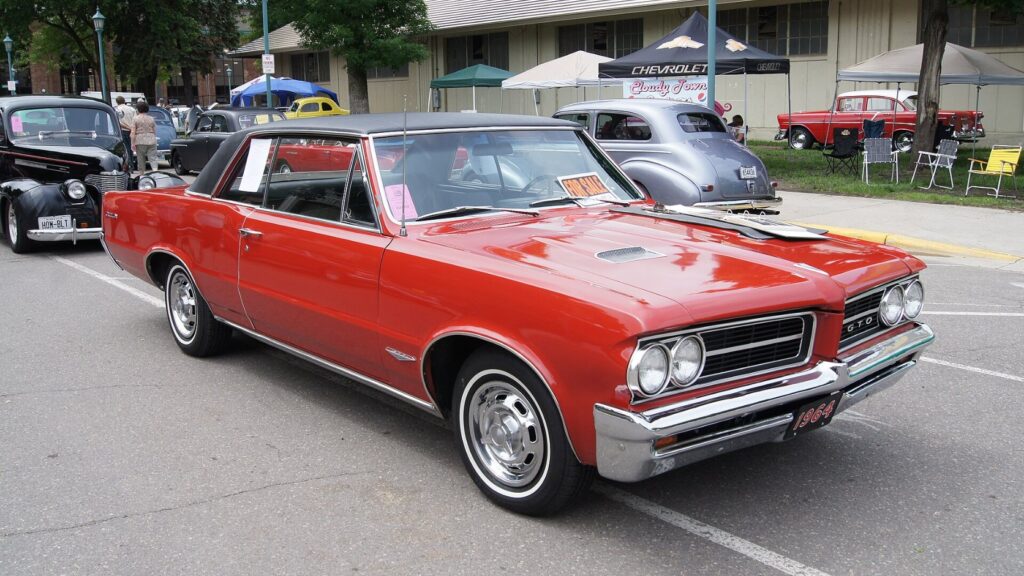
1966 Pontiac GTO
The 1966 Pontiac GTO became a separate model with Coke-bottle styling and record sales of 96,946.
 1 / 6
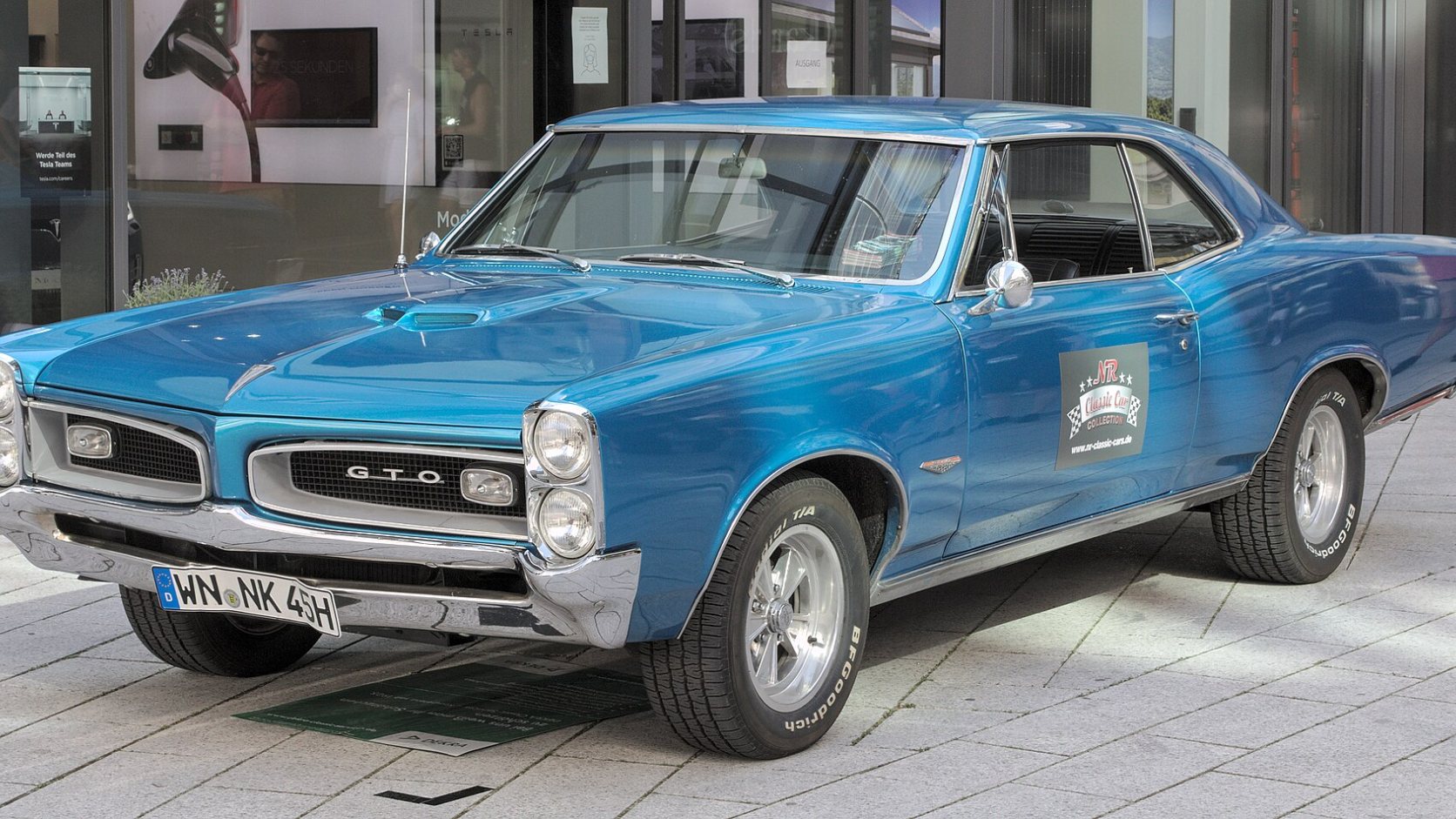
1966 Pontiac GTO. Photo: Alexander Migl via Wikimedia Commons, CC BY-SA 4.0.
Overview
The 1966 Pontiac GTO was the year the GTO became its own model line instead of an option on the LeMans. It was also the best sales year the GTO ever had, with 96,946 cars built.
The body was restyled with the curved “Coke-bottle” rear fender line that defined mid-1960s GM intermediates. The stacked headlights of the 1965 Pontiac GTO stayed, joined by a new plastic mesh grille and distinctive louvered taillights. Inside, the dash was trimmed in real wood veneer.
The 389 V8 carried over, with 335 horsepower from the standard four-barrel engine and 360 horsepower from the Tri-Power. This was the last year for the three two-barrel Tri-Power setup, and a small number of cars were built with the factory XS Ram Air package.
With three body styles, a strong image and a price close to ordinary family cars, the 1966 GTO was the car every other muscle car was measured against, from big-block Chevelles to the 1966 Dodge Charger.
1966 GTO timeline
- 1964Earlier development
- 1965Previous model year
- 1966Featured model year
- 1967Continued evolution
Engine options
| Engine | Type | Horsepower | Torque | Fuel / induction | Notes |
|---|---|---|---|---|---|
| 389 four-barrel | V8 | 335 hp | 431 lb-ft | Single 4-barrel carburetor | Standard GTO engine |
| 389 Tri-Power | V8 | 360 hp | 424 lb-ft | Three 2-barrel carburetors | Final year for Tri-Power |
| 389 Tri-Power XS Ram Air | V8 | 360 hp (advertised) | Three 2-barrel carburetors with Ram Air | Very low production |
Specifications at a glance
Production
- Hardtop73,785 (76.1%)
- Convertible12,798 (13.2%)
- Sports Coupe10,363 (10.7%)
Dimensions
Original colors
Color research in progress.
Performance
Buyer’s guide highlights
- Check the rear quarters, trunk floor, floor pans, lower fenders and rear window channel for rust.
- The 1966 VIN begins with 242 on a real GTO; confirm options with PHS documentation.
- Check the engine block code and date for a correct 389.
- Confirm Tri-Power and Ram Air parts are factory original.
- Inspect the frame, body mounts and suspension bushings.
- Check the louvered taillights and wood dash trim, which are specific to this year.
1. Check for Rust
Inspect any 1966 Pontiac GTO for rust in the rear quarter panels, trunk floor, floor pans, lower front fenders and around the rear window.
2. Document the Car
From 1966 the GTO has its own VIN series starting with 242, which makes clones easier to spot. PHS documentation still confirms the engine, transmission, color and options.
3. Check the Engine and Induction
Look for a correctly coded 389 and find out whether Tri-Power was fitted at the factory. Genuine XS Ram Air cars need expert verification.
4. Inspect the Chassis
Check the perimeter frame for rust and damage, and look at body mounts, bushings and brakes.
5. Buy the Best Example You Can
High production means good parts supply and plenty of choice, so hold out for a solid, documented car.
Values
1966 Pontiac GTO values are highest for documented Tri-Power four-speed convertibles and hardtops, with XS Ram Air cars in a class of their own; four-barrel sports coupes are the most affordable.
Market references are research guides, not appraisals. Actual value depends on condition, originality, documentation, drivetrain, options, location and current buyer demand.