1967 Ford Mustang
The 1967 Ford Mustang was redesigned with larger dimensions, new body styling, and a wider range of six-cylinder and V8 engines.
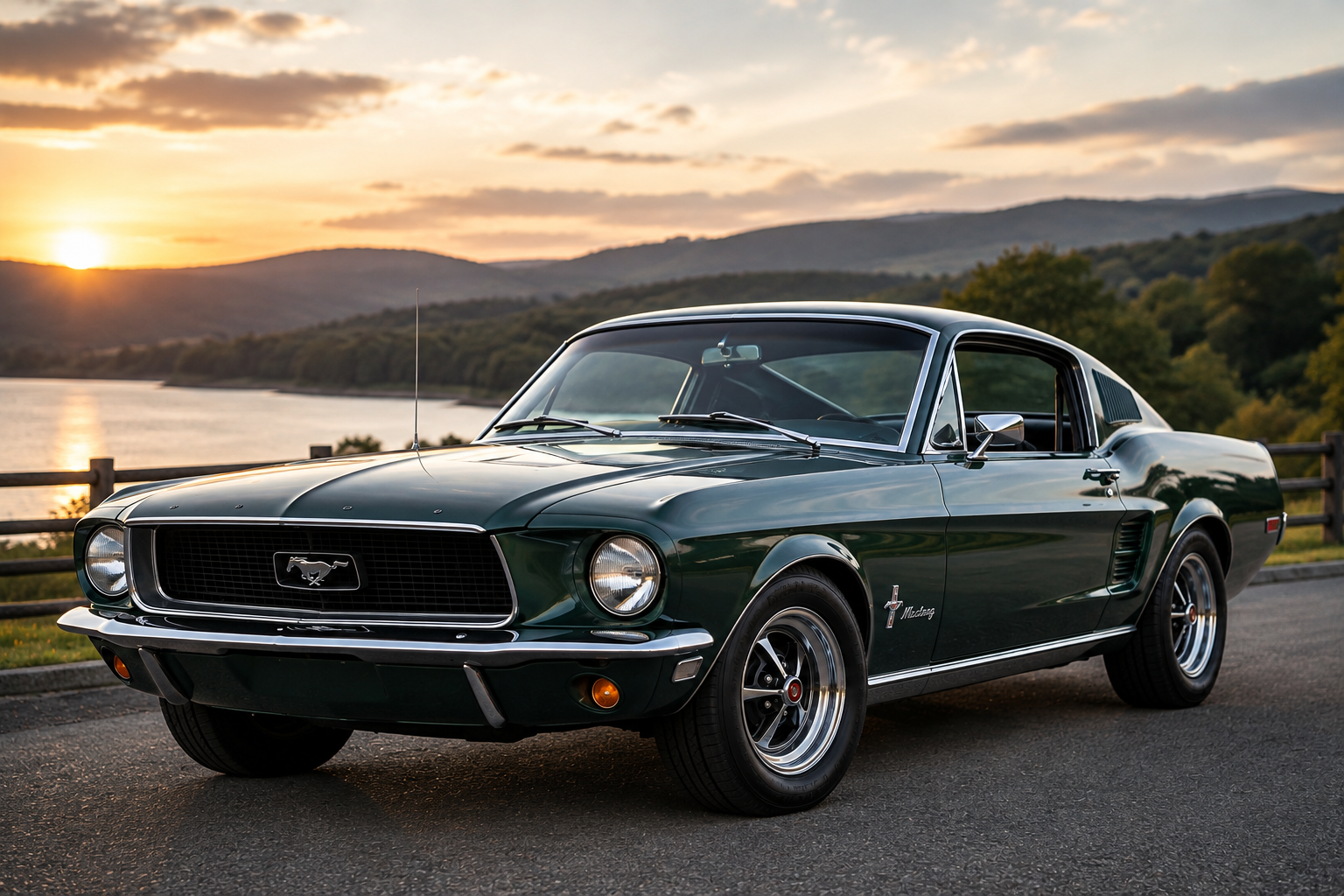 1 / 6
1967 Ford Mustang — classic American pony car
Overview
The 1967 Ford Mustang marked an important redesign for Ford’s iconic pony car. For the 1967 model year, the Mustang became longer and wider while retaining its 108-inch wheelbase, giving the car a more substantial and aggressive appearance. Ford also revised the front suspension, introduced a dual braking system, enlarged the grille and redesigned the rear of the car.
The 1967 Mustang was available in three main body styles: hardtop coupe, fastback and convertible. Buyers could choose from several engines, including the 200-cubic-inch six-cylinder, 289-cubic-inch V8 engines and the high-performance 271-horsepower K-Code V8. A new 390-cubic-inch V8 rated at 320 horsepower expanded the Mustang’s performance range.
Ford produced 472,121 Mustangs for 1967, with the hardtop accounting for 356,271 cars, followed by 71,042 fastbacks and 44,808 convertibles. The 1967 model year also saw the introduction of the Shelby GT500, adding another high-performance chapter to Mustang history.
Today, the 1967 Ford Mustang remains an important classic because it combines the original Mustang’s recognizable character with the larger, more muscular styling introduced for this model year.
The Mustang formula started two years earlier. Read our full guide to the 1965 Ford Mustang, the first-year car that created the pony car class.
1967 Mustang timeline
- 1964Mustang introduced
- 1965First full model year
- 1966Refinements and upgrades
- 1967All-new redesign
- 1968More power and options
Engine options
| Engine | Type | Horsepower | Torque | Fuel / induction | Notes |
|---|---|---|---|---|---|
| 200 cu in (3.3L) | Inline-6 | 120 hp | 190 lb-ft | 1-barrel carburetor | Standard six-cylinder engine |
| 289 cu in (4.7L) | V8 | 200 hp | 282 lb-ft | 2-barrel carburetor | Entry-level 289 V8 |
| 289 cu in (4.7L) | V8 | 225 hp | 305 lb-ft | 4-barrel carburetor | Higher-output 289 V8 |
| 289 cu in (4.7L) Hi-Po | V8 | 271 hp | 312 lb-ft | 4-barrel carburetor | K-Code high-performance V8 |
| 390 cu in (6.4L) FE | V8 | 320 hp | 427 lb-ft | 4-barrel carburetor | S-Code big-block V8 |
Specifications at a glance
Production
- Hardtop356,271 (75.5%)
- Fastback71,042 (15.0%)
- Convertible44,808 (9.5%)
Dimensions
Original colors
Performance
Buyer’s guide highlights
- Structural rust is the costliest problem to put right, so check the floor pans, torque boxes, cowl and shock towers first.
- Confirm the VIN, engine and transmission numbers match the door data plate and any supporting paperwork.
- The 289 V8, K-Code and big-block 390 FE cars attract the strongest collector demand.
- Fastbacks command a premium over hardtops, and a solid documented car usually costs less than restoring a project.
1967 Ford Mustang Buyer's Guide
The 1967 Ford Mustang is one of the most desirable early Mustangs, combining classic first-generation styling with a wider selection of engines and improved space. Buyers can choose from hardtop, fastback and convertible body styles, with values varying considerably according to condition, originality, engine and factory options.
What to Check Before Buying
Rust: Rust is one of the most important issues to investigate. Carefully inspect the floor pans, frame rails, rocker panels, lower doors, quarter panels, wheel arches, trunk floor and areas around the cowl. Structural rust can make an apparently affordable Mustang expensive to restore.
Cowl leaks: Check the cowl area for corrosion and water leakage. Pouring water through the exterior cowl vents and checking the interior for leaks can help reveal deterioration that may otherwise be difficult to see.
Engine and drivetrain: Confirm that the engine starts easily, maintains good oil pressure and does not produce excessive smoke or unusual noises. Check the transmission, differential, cooling system and driveline for leaks, vibration or excessive wear.
Body condition: Examine panel gaps, door alignment and the front structure for evidence of previous collision repairs. Look for excessive body filler, poorly repaired sheet metal and differences in paint finish between panels.
Brakes and suspension: Inspect steering components, bushings, ball joints, shocks and brakes. A car that wanders, pulls strongly under braking or has excessive steering play may require suspension or steering work.
Verify the Car's Identity
Check the VIN and data plate information before purchasing, particularly on valuable V8, GT and performance-oriented examples. Engine type, body style, assembly plant, paint, trim, axle and transmission information can help determine how the Mustang was originally configured.
Cars represented as rare factory configurations should receive additional documentation and verification before a premium price is paid. A replacement engine does not necessarily make a Mustang undesirable, but originality can significantly affect collector value.
Parts Availability
Parts availability is generally excellent for the 1967 Mustang. Reproduction body panels, interior components, trim, suspension parts, brakes, electrical components and many mechanical parts are readily available. This makes the model considerably easier to maintain and restore than many less-popular classics of the same era.
Which Version Should You Buy?
A six-cylinder or standard 289 V8 hardtop can be a practical choice for someone who wants an enjoyable classic without paying the premium associated with rarer models. Fastbacks, convertibles, K-Code cars, big-block 390 models and documented performance packages generally command greater collector interest.
For most buyers, a structurally solid and well-maintained Mustang is preferable to a cheaper example requiring extensive rust repair. Restoration costs can quickly exceed the difference in purchase price between a project car and a better-condition vehicle.
Before You Purchase
Whenever possible, have the vehicle inspected by a mechanic or restoration specialist familiar with first-generation Mustangs. Verify important identification numbers and documentation, inspect the underside on a lift and determine the extent of previous repairs before agreeing on a price.
Important
Market figures are research guides, not appraisals. A specific 1967 Mustang should be valued on its VIN, body style, drivetrain, factory options, originality, restoration quality, documentation, condition and current buyer demand.
Values
Values vary widely by body style, engine, originality and condition, so the reference points below matter more than any single figure.
| Variant / body style | Market reference | Reference value (USD) | Context |
|---|---|---|---|
| Hardtop coupe (289 V8) | Auction result, Aug 2026 | $15,900 | Reported sold price |
| Fastback (289 V8) | Auction result, Jul 2026 | $69,300 | Reported sold price |
| Fastback | Auction result, Aug 2026 | $94,500 | Reported sold price, higher-specification example |
| Convertible (289 V8) | Auction result, Aug 2026 | $35,700 | Reported sold price |
| Fastback 390 V8 | Hagerty Price Guide | $79,400 | #3 Good condition benchmark, 390 cu in / 320 hp 4-barrel |
Market references are research guides, not appraisals. Actual value depends on condition, originality, documentation, drivetrain, options, location and current buyer demand.