1958 Ford Thunderbird
The 1958 Ford Thunderbird became a four-seat unibody "Square Bird" and created the personal luxury car.
 1 / 6
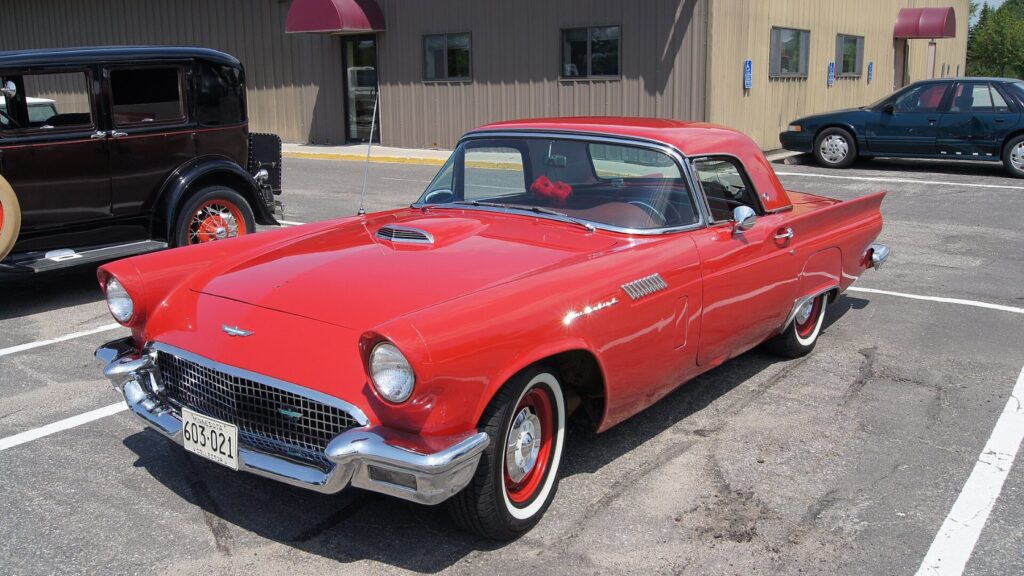
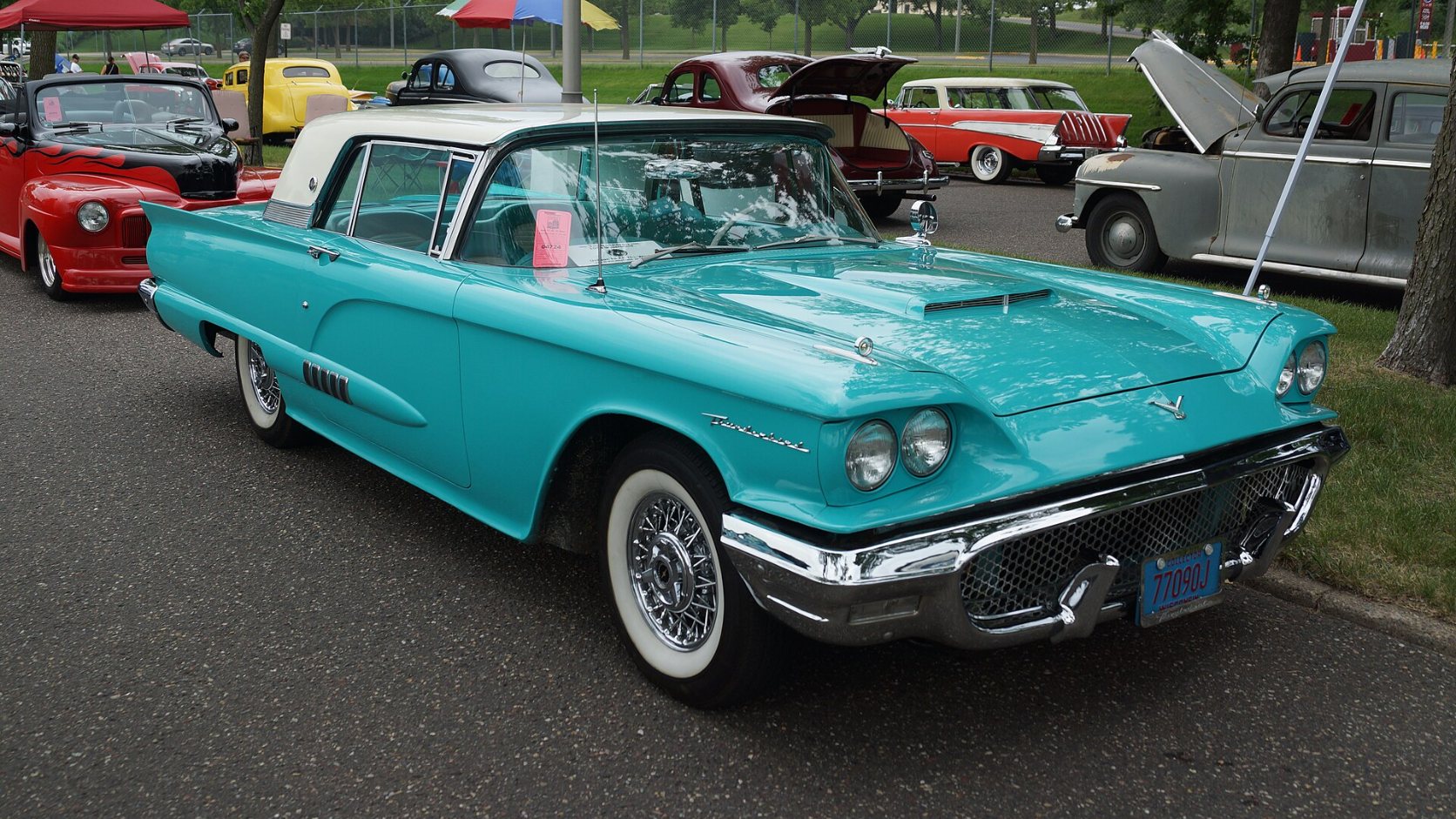
1958 Ford Thunderbird. Photo: Greg Gjerdingen from Willmar, USA via Wikimedia Commons, CC BY 2.0.
Overview
The 1958 Ford Thunderbird was a complete change of direction. Ford replaced the two-seat 1957 Ford Thunderbird with a larger four-seat car, a decision pushed by Ford management to reach far more buyers.
Known today as the “Square Bird” for its crisp, angular styling, the 1958 model used unibody construction, which let it sit very low without giving up interior room. A tall center console ran between four individual-style seats and became a signature of Thunderbird interiors for years.
The only engine was the new 352 cubic-inch FE-series V8 rated at 300 horsepower, most often paired with the Cruise-O-Matic automatic. The hardtop arrived first, and a convertible with a top that folded under the rear deck joined it later in the model year.
The gamble paid off. Despite a recession year and a late start, Ford built 37,892 cars, far more than any two-seat year, and the Thunderbird was named Motor Trend Car of the Year. The four-seat car created the personal luxury class that many rivals later entered.
1958 Thunderbird timeline
- 1956Earlier development
- 1957Previous model year
- 1958Featured model year
- 1959Continued evolution
Engine options
| Engine | Type | Horsepower | Torque | Fuel / induction | Notes |
|---|---|---|---|---|---|
| 352 Interceptor Special | V8 | 300 hp | 395 lb-ft | 4-barrel carburetor | Only engine offered |
Specifications at a glance
Production
- Hardtop35,758 (94.4%)
- Convertible2,134 (5.6%)
Dimensions
Original colors
Color research in progress.
Performance
Buyer’s guide highlights
- Check the unibody structure carefully: floors, rocker panels, torque boxes and trunk floor.
- Look at the lower fenders, door bottoms and rear quarters for rust.
- Check the rear coil-spring suspension, which was used for 1958 only.
- On convertibles, test the complex top mechanism and deck lid.
- Check the interior console, trim and bright work for completeness.
- Buy on structure; rust repair on a unibody car is costly.
1. Check the Unibody
Any 1958 Ford Thunderbird depends on its unibody for strength. Inspect the floors, inner rocker panels, torque boxes and trunk floor for rust and poor repairs.
2. Inspect the Body Panels
Look for rust in the lower fenders, door bottoms and rear quarter panels, and check panel gaps for signs of structural sag.
3. Check the Suspension
The 1958 model used coil springs at the rear, a one-year design. Check for sagging, worn bushings and missing parts.
4. Test Convertible Tops
Only 2,134 convertibles were built, and the top mechanism is complicated. Make sure it works fully and the parts are all there.
5. Buy the Best Example You Can
Square Birds are still affordable, so there is little reason to take on a rusty project. Choose a solid, complete car.
Values
1958 Ford Thunderbird values are highest for the rare convertible in restored condition; hardtops remain one of the more affordable ways into a 1950s Thunderbird, with condition the main factor.
Market references are research guides, not appraisals. Actual value depends on condition, originality, documentation, drivetrain, options, location and current buyer demand.