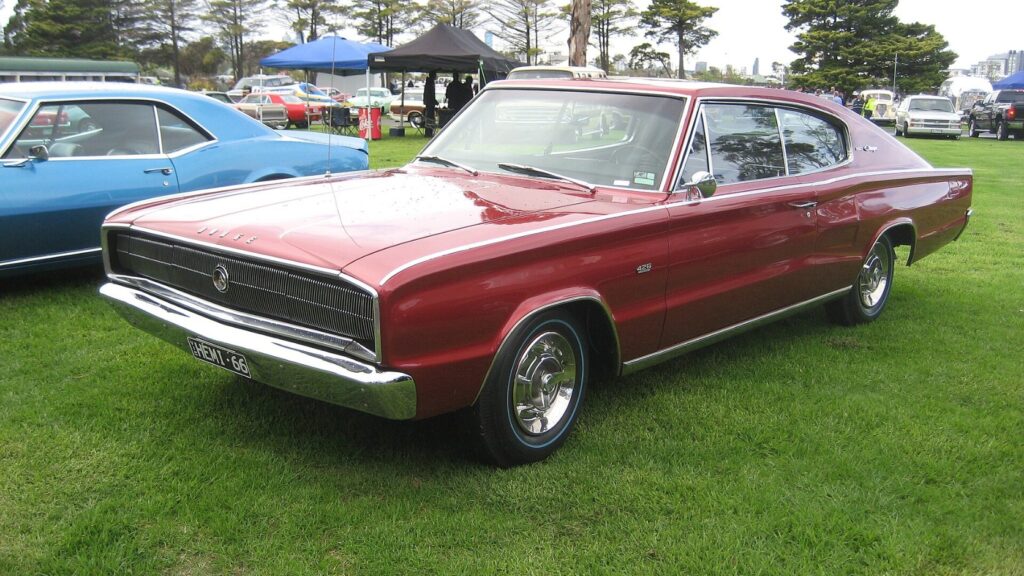
1967 Dodge Charger
The 1967 Dodge Charger kept the original fastback body and added the 375 hp 440 Magnum V8.
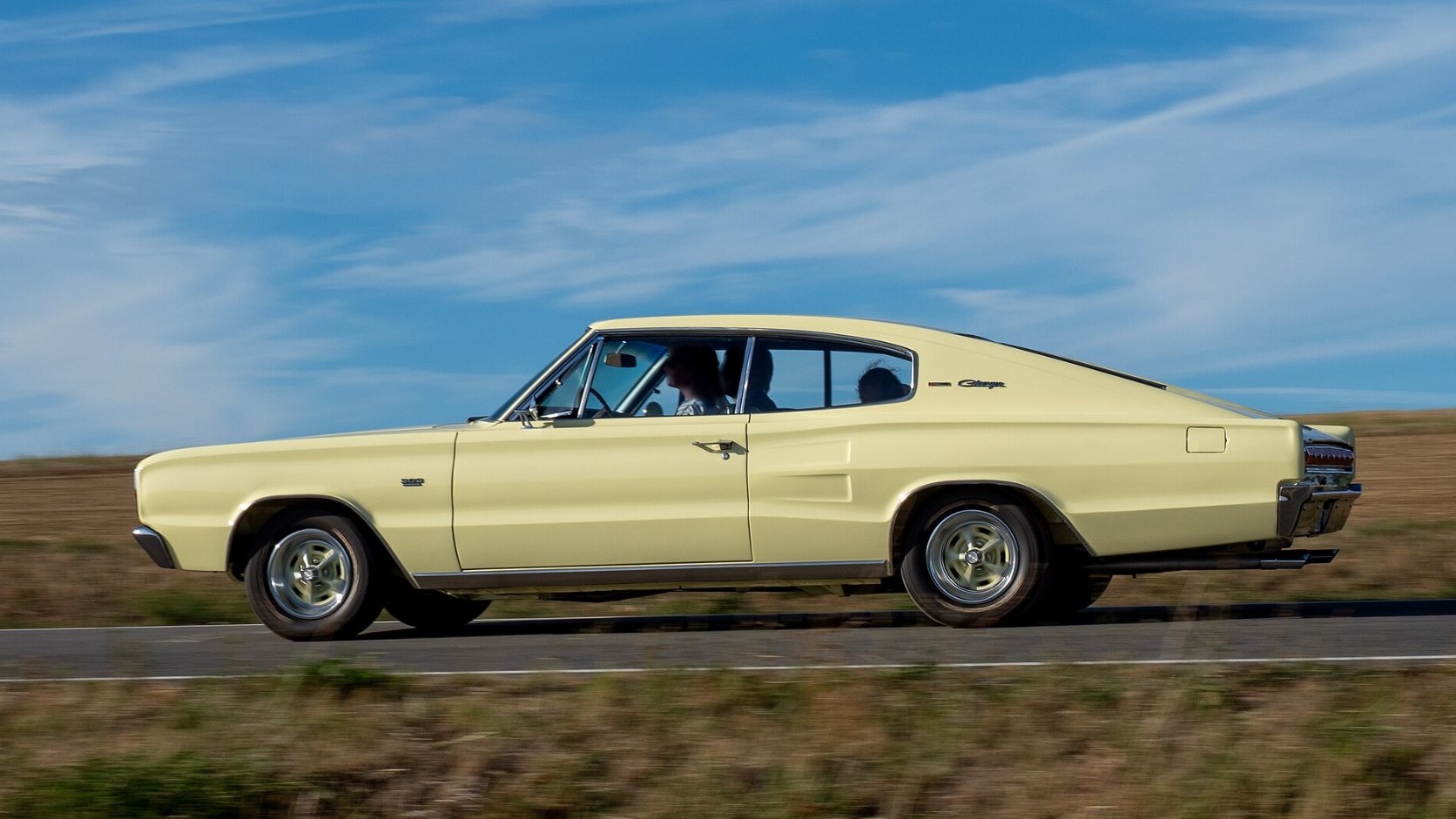 1 / 6
1967 Dodge Charger. Photo: Ermell via Wikimedia Commons, CC BY-SA 4.0.
Overview
The 1967 Dodge Charger was the second and final year of the original fastback body. It looked almost the same as the 1966 Dodge Charger, with the hidden headlights and full-width taillight carried over, but there were useful changes to the engines and interior.
The biggest news was the new 440 Magnum V8, rated at 375 horsepower and offered alongside the 426 Street Hemi as a top performance choice. The 361 was dropped, a two-barrel 383 took its place, and the base 318 was the newer, lighter design.
Outside, 1967 cars can be spotted by the turn signal indicators mounted on top of the front fenders, and a vinyl roof became available. Inside, the full-length console was shortened so rear passengers could move across the car, and a front center cushion with a folding armrest could be ordered in place of the console.
Sales fell sharply to 15,788 cars as buyers waited for something new, and only a small number were built with the Hemi. The slow year led directly to the completely restyled 1968 Charger, which makes the 1967 fastback a much rarer sight today.
1967 Charger timeline
- 1965Earlier development
- 1966Previous model year
- 1967Featured model year
- 1968Continued evolution
Engine options
| Engine | Type | Horsepower | Torque | Fuel / induction | Notes |
|---|---|---|---|---|---|
| 318 | V8 | 230 hp | 340 lb-ft | 2-barrel carburetor | Base engine |
| 383 two-barrel | V8 | 270 hp | 390 lb-ft | 2-barrel carburetor | Replaced the 361 |
| 383 four-barrel | V8 | 325 hp | 425 lb-ft | 4-barrel carburetor | Optional |
| 440 Magnum | V8 | 375 hp | 480 lb-ft | 4-barrel carburetor | New for 1967 |
| 426 Street Hemi | V8 | 425 hp | 490 lb-ft | Dual 4-barrel carburetors | Very low production |
Specifications at a glance
Production
15,7881967 Dodge Charger
Dimensions
Original colors
Color research in progress.
Performance
Buyer’s guide highlights
- Check the rear quarters, trunk floor, floor pans, lower fenders and rear window area for rust.
- Test the hidden headlights, which rotate with electric motors and often fail.
- Check the electroluminescent gauges and the full-width taillight.
- Inspect the interior carefully; seats, console and trim are hard to find.
- Verify a claimed 440 or 426 Hemi car with the VIN, fender tag and paperwork.
- Buy on completeness; 1967 cars are rare and trim parts are scarce.
1. Check for Rust
Inspect any 1967 Dodge Charger for rust in the rear quarter panels, trunk floor, floor pans, lower fenders and around the large rear window.
2. Test the Hidden Headlights and Electrics
Make sure the rotating headlights, electroluminescent gauges and full-width taillight all work, because repairs can be slow and costly.
3. Inspect the Interior
The bucket seats, console and folding rear seats are specific to the 1966 and 1967 Charger. Missing interior parts are difficult to replace.
4. Verify Big-Block and Hemi Cars
The engine code in the VIN and the fender tag should match a claimed 440 Magnum or 426 Hemi. Hemi cars need especially careful documentation.
5. Buy the Best Example You Can
Low production means fewer cars and fewer spare parts. A complete, solid car is worth paying extra for.
Values
1967 Dodge Charger values are led by documented 426 Hemi cars, followed by 440 Magnum and 383 four-barrel cars; 318 Chargers remain among the more affordable 1960s Mopar fastbacks.
Market references are research guides, not appraisals. Actual value depends on condition, originality, documentation, drivetrain, options, location and current buyer demand.