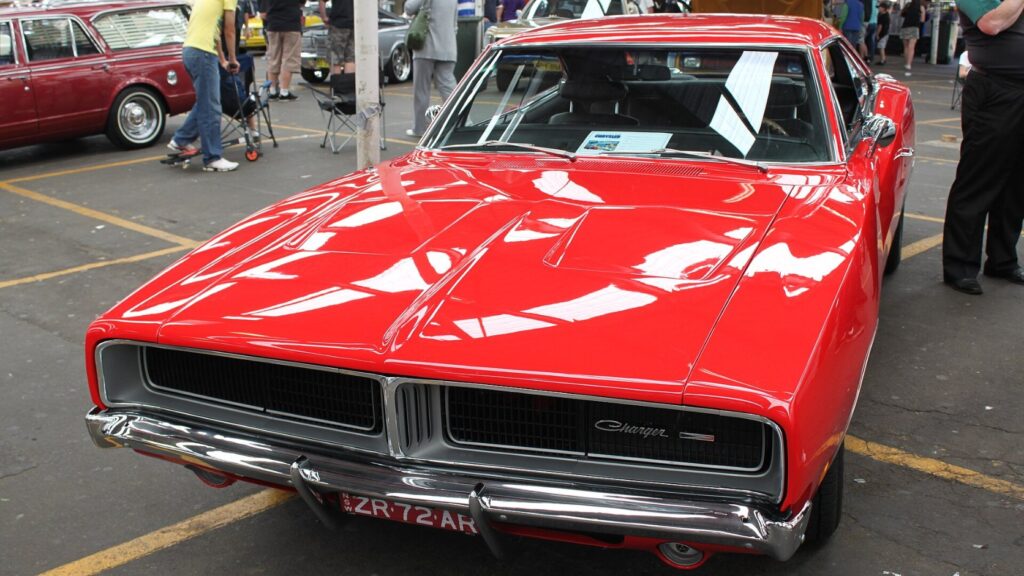
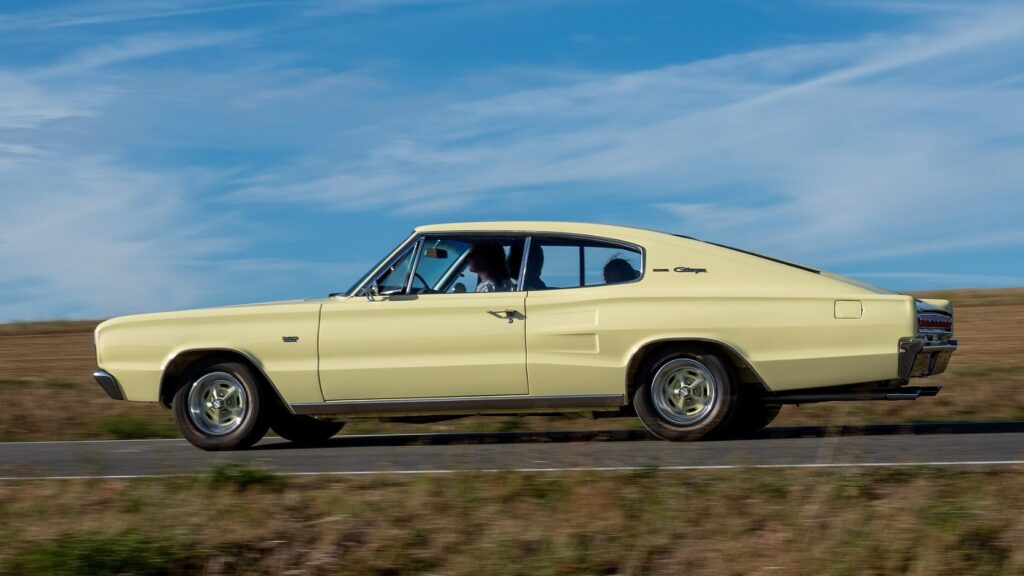
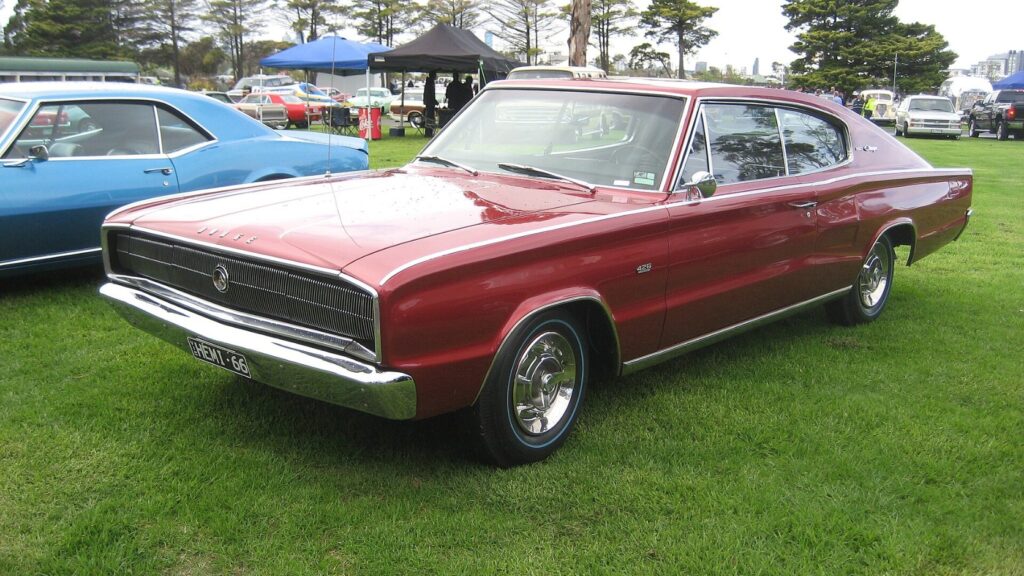
1968 Dodge Charger
The 1968 Dodge Charger introduced the famous second-generation body and the 440-powered R/T.
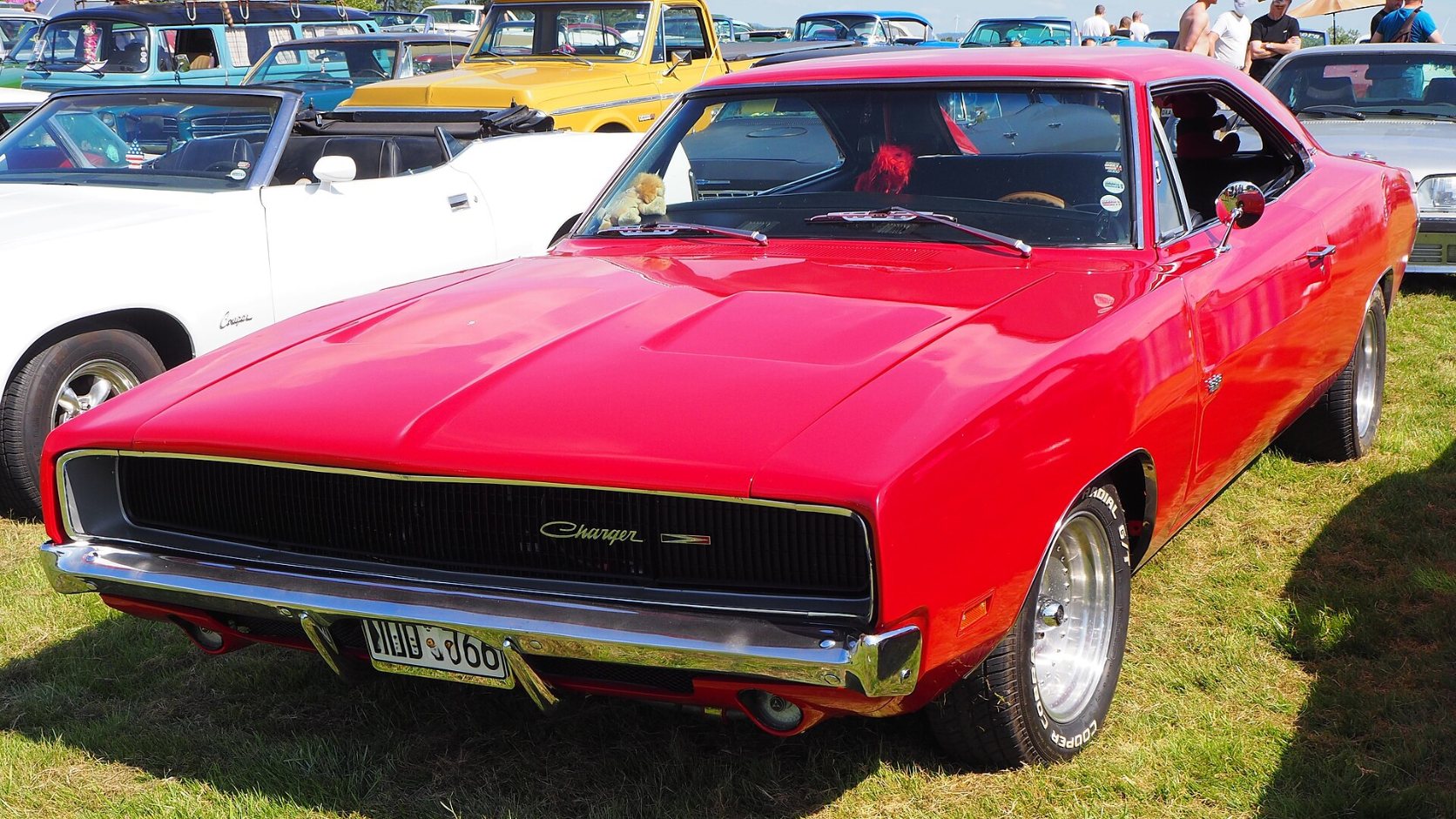 1 / 6
1968 Dodge Charger. Photo: Herranderssvensson via Wikimedia Commons, CC BY 4.0.
Overview
The 1968 Dodge Charger was a complete redesign and the car that made the Charger name famous. After slow sales of the 1967 Dodge Charger fastback, Dodge gave the second generation a new body that became one of the best-known shapes of the muscle car era.
The new design used curved “Coke-bottle” sides, a full-width recessed grille with hidden headlights, and a tunneled rear window set between flowing roof pillars. At the back were four round taillights, a detail unique to 1968. The interior switched to a conventional layout with a rear bench seat.
Dodge also introduced the Charger R/T, its performance model. The R/T came standard with the 375-horsepower 440 Magnum V8, heavy-duty suspension and brakes, and bumblebee stripes across the tail, with the 426 Street Hemi as the only engine option.
Buyers responded right away. Production jumped to about 96,100 cars, including 17,584 R/Ts, and a black 1968 Charger R/T became a film icon as the villains’ car in the chase scene from Bullitt, opposite a 1968 Ford Mustang.
1968 Charger timeline
- 1966Earlier development
- 1967Previous model year
- 1968Featured model year
- 1969Continued evolution
Engine options
| Engine | Type | Horsepower | Torque | Fuel / induction | Notes |
|---|---|---|---|---|---|
| 318 | V8 | 230 hp | 340 lb-ft | 2-barrel carburetor | Base V8 |
| 383 two-barrel | V8 | 290 hp | 390 lb-ft | 2-barrel carburetor | Optional |
| 383 four-barrel | V8 | 330 hp | 425 lb-ft | 4-barrel carburetor | Optional |
| 440 Magnum | V8 | 375 hp | 480 lb-ft | 4-barrel carburetor | Standard on R/T |
| 426 Street Hemi | V8 | 425 hp | 490 lb-ft | Dual 4-barrel carburetors | R/T option, very low production |
Specifications at a glance
Production
- Charger78,516 (81.7%)
- Charger R/T17,584 (18.3%)
Dimensions
Original colors
Color research in progress.
Performance
Buyer’s guide highlights
- Check the rear quarters, trunk floor, floor pans, lower fenders and rear window channel for rust.
- Look closely around the recessed rear window, where water collects and rust starts.
- Test the vacuum-operated hidden headlight doors.
- Verify a real R/T by the VIN, which begins with XS29 on 1968 R/T cars.
- Verify a claimed 426 Hemi with the VIN engine code, fender tag and paperwork.
- Buy on structure and documentation; many cars have been modified or turned into film replicas.
1. Check for Rust
Inspect any 1968 Dodge Charger for rust in the rear quarter panels, trunk floor, floor pans, lower fenders and frame rails. The tunneled rear window area is a well-known trouble spot.
2. Test the Hidden Headlights
The headlight doors are vacuum operated. Slow, uneven or stuck doors usually mean leaking hoses or worn actuators.
3. Authenticate the R/T
A genuine 1968 Charger R/T has a VIN starting with XS29. The fender tag and broadcast sheet, if present, should match the car's engine, color and options.
4. Verify Hemi and 440 Cars
The fifth character of the VIN is the engine code. Hemi cars are extremely valuable and often faked, so expert inspection is worthwhile.
5. Buy the Best Example You Can
Reproduction parts are widely available, but rust repair on these unibody cars is expensive. A solid, documented car is the smart purchase.
Values
1968 Dodge Charger values are led by documented 426 Hemi R/Ts, followed by 440 R/T cars; 383 cars are strong, and 318 Chargers are the most affordable way into the second-generation body.
Market references are research guides, not appraisals. Actual value depends on condition, originality, documentation, drivetrain, options, location and current buyer demand.