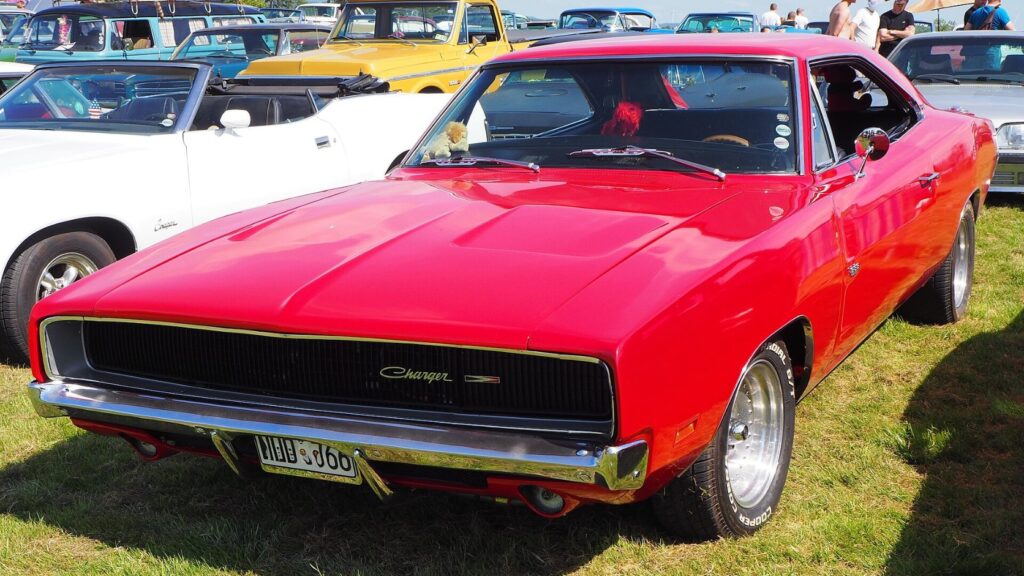
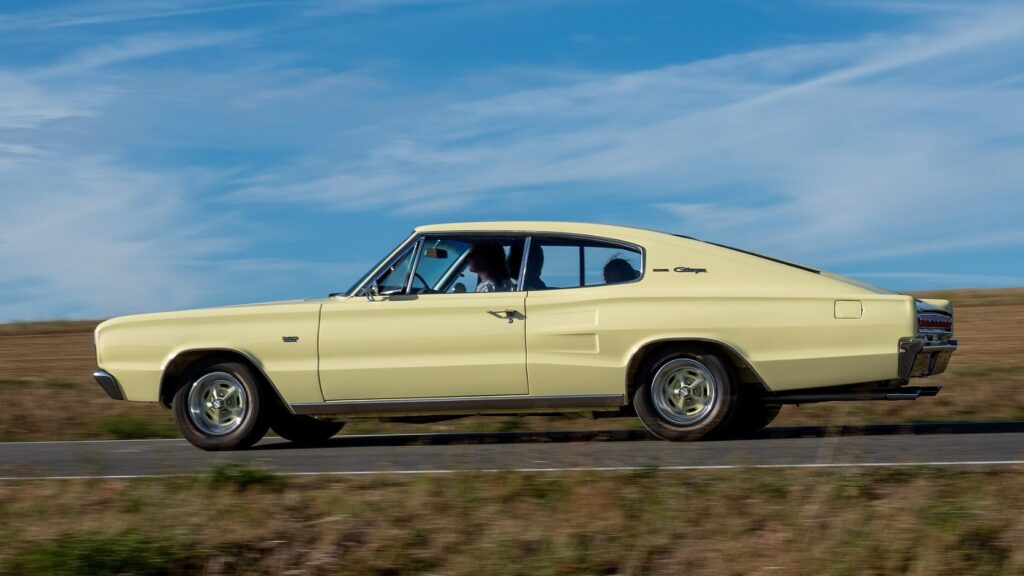
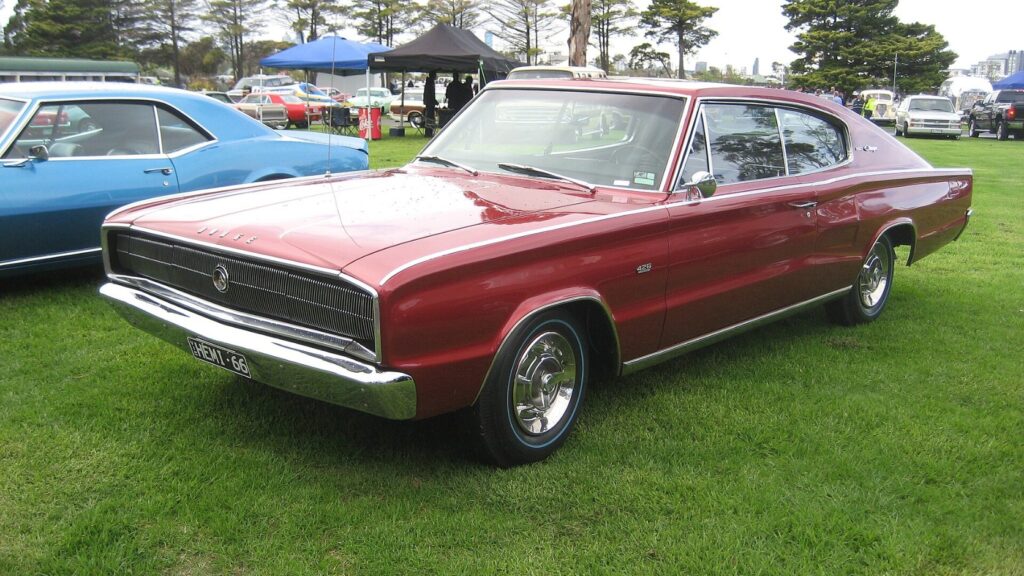
1969 Dodge Charger
The 1969 Dodge Charger added the split grille, new taillights and the NASCAR-bred Charger 500 and Daytona.
 1 / 6
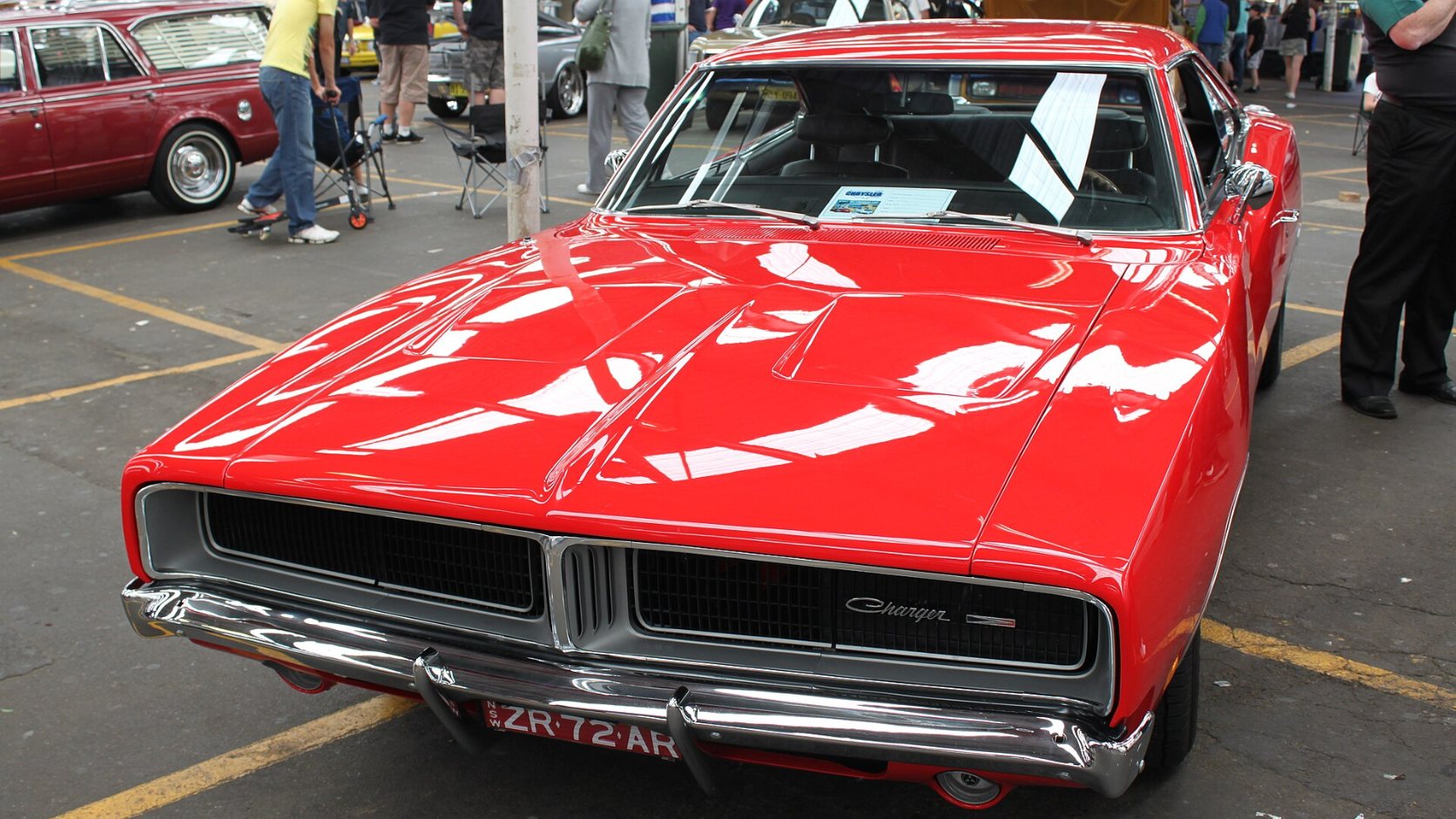
1969 Dodge Charger. Photo: Jeremy from Sydney, Australia via Wikimedia Commons, CC BY 2.0.
Overview
The 1969 Dodge Charger is probably the best-known Charger of all. It used the same body as the 1968 Dodge Charger with two easy-to-spot changes: a center divider in the grille and wide rectangular taillights in place of the four round lamps.
The lineup grew. A Special Edition (SE) package added leather seat inserts and wood-grain trim and could be combined with the R/T. A six-cylinder Charger was offered for the first time, though very few were sold. The R/T continued with the 440 Magnum as standard and the 426 Hemi as an option.
Dodge also built two special models to win in NASCAR. The Charger 500 had a flush grille and a flush rear window for better airflow, and the Charger Daytona that followed added a pointed nose cone and a tall rear wing. Just over 500 Daytonas were built so the car could qualify for racing.
Production was about 89,200 cars, including roughly 20,000 R/Ts. The 1969 Charger later became famous on television and in films, which has helped make it one of the most valuable and most copied muscle cars.
1969 Charger timeline
- 1967Earlier development
- 1968Previous model year
- 1969Featured model year
- 1970Continued evolution
Engine options
| Engine | Type | Horsepower | Torque | Fuel / induction | Notes |
|---|---|---|---|---|---|
| 225 slant-six | I6 | 145 hp | 215 lb-ft | 1-barrel carburetor | Very low production |
| 318 | V8 | 230 hp | 340 lb-ft | 2-barrel carburetor | Base V8 |
| 383 two-barrel | V8 | 290 hp | 390 lb-ft | 2-barrel carburetor | Optional |
| 383 four-barrel | V8 | 330 hp | 425 lb-ft | 4-barrel carburetor | Optional |
| 440 Magnum | V8 | 375 hp | 480 lb-ft | 4-barrel carburetor | Standard on R/T, 500 and Daytona |
| 426 Street Hemi | V8 | 425 hp | 490 lb-ft | Dual 4-barrel carburetors | Optional on R/T, 500 and Daytona |
Specifications at a glance
Production
Approx. 89,2001969 Dodge Charger
Dimensions
Original colors
Color research in progress.
Performance
Buyer’s guide highlights
- Check the rear quarters, trunk floor, floor pans, lower fenders and frame rails for rust.
- Look closely around the recessed rear window, a well-known rust area.
- Test the vacuum-operated hidden headlight doors.
- Verify a real R/T by the VIN, which begins with XS29 on 1969 R/T cars.
- Treat any claimed Hemi, Charger 500 or Daytona as needing expert verification.
- Watch for film and TV replicas built from base cars.
1. Check for Rust
Inspect any 1969 Dodge Charger for rust in the rear quarter panels, trunk floor, floor pans, lower fenders and frame rails, and around the tunneled rear window.
2. Test the Hidden Headlights
The headlight doors are vacuum operated. Slow or stuck doors usually point to leaking hoses or worn actuators.
3. Authenticate the Model
A genuine R/T has a VIN starting with XS29, and the fifth character is the engine code. The fender tag and broadcast sheet should agree with the car.
4. Verify Rare Cars
Hemi cars, Charger 500s and Daytonas are extremely valuable and often reproduced. Use a marque expert before buying.
5. Buy the Best Example You Can
Demand for 1969 Chargers is very high, so rough cars are expensive too. A solid, documented car is the better investment.
Values
1969 Dodge Charger values are led by Hemi Daytonas and Hemi R/Ts, followed by 440 Daytonas, Charger 500s and 440 R/Ts; 383 and 318 cars are the most affordable but still in strong demand.
Market references are research guides, not appraisals. Actual value depends on condition, originality, documentation, drivetrain, options, location and current buyer demand.