1982 Ford Mustang
The 1982 Ford Mustang brought back the GT and the 5.0-liter High Output V8, launching the Fox-body performance era.
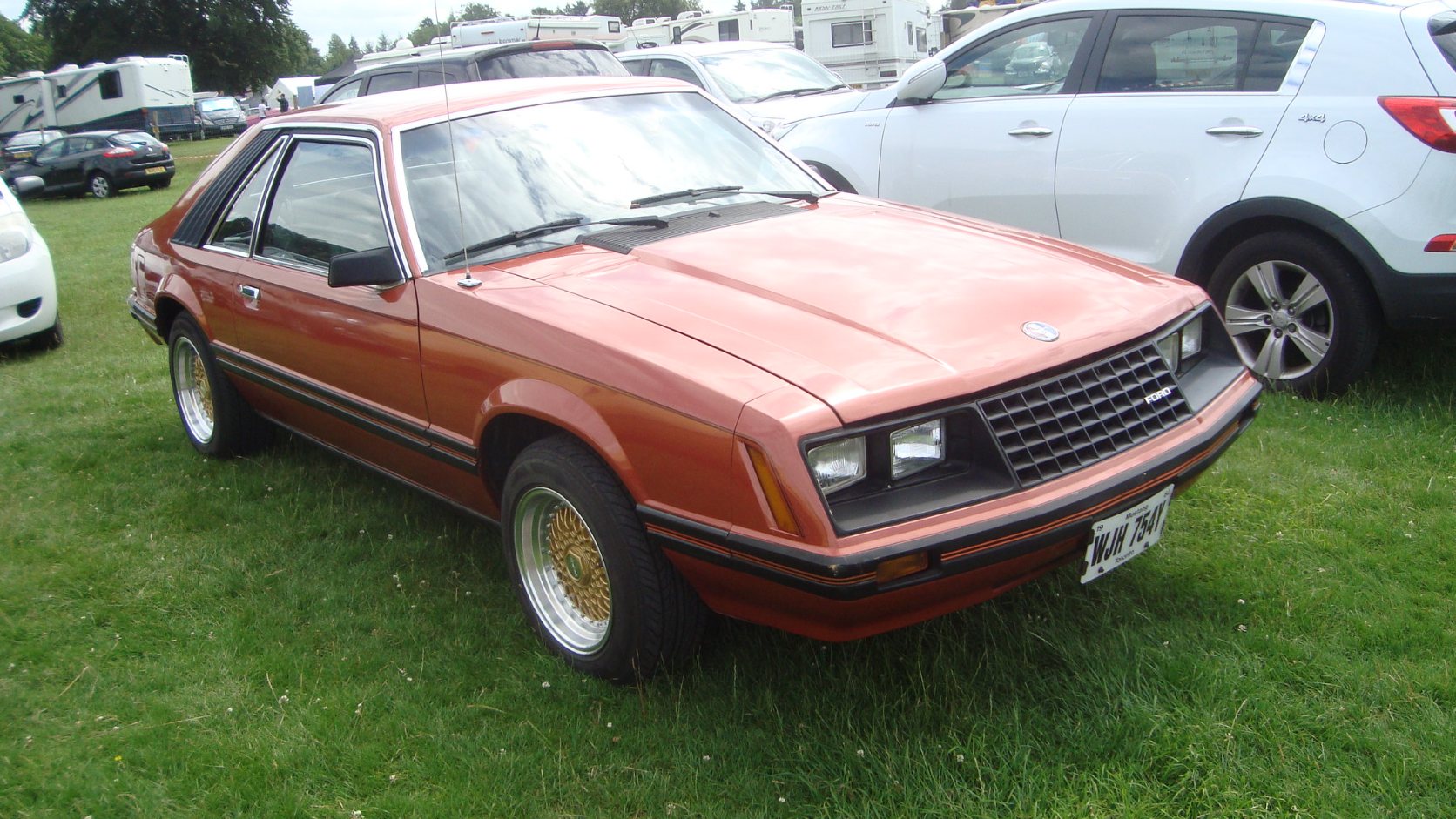 1 / 6
1982 Ford Mustang GL hatchback with the 3.3-liter six. Photo: kieranwhite599 via Flickr, CC BY 2.0.
Overview
The 1982 Ford Mustang marked the return of real performance to the Mustang line. After two years without a 302, Ford brought back the 5.0-liter V8 in High Output form and revived the GT name, promoting the car with the famous line “The Boss is Back!” It was a major step up from the 1981 Ford Mustang.
The 5.0 H.O. V8 produced about 157 horsepower thanks to improved intake and exhaust, and it came with a four-speed manual overdrive transmission. The new Mustang GT, offered only as a hatchback, added a front air dam, fog lamps, a rear spoiler and sport suspension, and it replaced the Cobra as the sporty model.
Ford also renamed the trim levels. The lineup now ran from the base L coupe through the GL and GLX to the GT. Buyers could still choose the 2.3-liter four-cylinder, the 3.3-liter inline six in its final year, or the 4.2-liter V8 with an automatic transmission.
Ford built 130,418 Mustangs for 1982, a low total for the era, but the 5.0 GT set the direction for the rest of the Fox-body years and started the 5.0 performance era that followed. For more background, see the third-generation Mustang history, or compare it with the original 1965 Ford Mustang.
1982 Mustang timeline
- 1980Earlier development
- 1981Previous model year
- 1982Featured model year
- 1983Continued evolution
Engine options
| Engine | Type | Horsepower | Torque | Fuel / induction | Notes |
|---|---|---|---|---|---|
| 2.3L (140 cu in) Lima | Inline-4 | Approx. 88 hp | 2-barrel carburetor | Standard engine | |
| 3.3L (200 cu in) | Inline-6 | Approx. 94 hp | 1-barrel carburetor | Final year of the inline six | |
| 4.2L (255 cu in) Windsor | V8 | Approx. 120 hp | 2-barrel carburetor | Automatic only | |
| 5.0L (302 cu in) H.O. | V8 | Approx. 157 hp | 2-barrel carburetor | New High Output V8; standard in the GT |
Specifications at a glance
Production
- Coupe51,144 (39.2%)
- Hatchback79,274 (60.8%)
Dimensions
Original colors
Color research in progress.
Performance
Buyer’s guide highlights
- Inspect the floor pans, torque boxes, strut towers and rear frame rails for rust.
- Verify a claimed GT with the VIN and paperwork, since GT parts are easy to add to a base hatchback.
- Confirm the engine code — 1982 GTs came with the 5.0 H.O. V8, and many cars have had later engines swapped in.
- Check the four-speed manual and clutch linkage for wear.
- Look for original GT body parts such as the air dam, fog lamps and spoiler.
- Buy on condition and documentation, since original 1982 GTs are increasingly rare.
1. Start With Rust and Structure
Check the floor pans, torque boxes, strut towers and rear frame rails on any 1982 Ford Mustang. Fox-body cars were often driven hard, so also look for signs of accident repair.
2. Authenticate the GT
The 1982 GT is the most desirable version. Check the VIN, trim tag and paperwork, and confirm the car has original GT features such as the front air dam, fog lamps and rear spoiler.
3. Check the Engine and Drivetrain
Confirm the 5.0 H.O. engine matches the VIN code. Many Fox-body cars have had engines replaced or modified. Test the four-speed manual and clutch, and listen for rear axle noise.
4. Inspect Suspension and Brakes
Worn bushings, sagging springs and tired shocks are common. A test drive will show if the car wanders, clunks or brakes poorly.
5. Look at the Interior
Seats, door panels and dashboards can crack or wear. Check that interior parts are complete and in good shape.
6. Buy the Best Example You Can
Original, unmodified 1982 GTs are becoming harder to find, so a documented car is usually worth paying more for.
Values
1982 Ford Mustang values vary widely, with documented original 5.0 GT hatchbacks drawing the strongest collector interest.
Market references are research guides, not appraisals. Actual value depends on condition, originality, documentation, drivetrain, options, location and current buyer demand.