1986 Ford Mustang
The 1986 Ford Mustang introduced multiport fuel injection on the 5.0 V8 and a stronger 8.8-inch rear axle, while the SVO reached its final year.
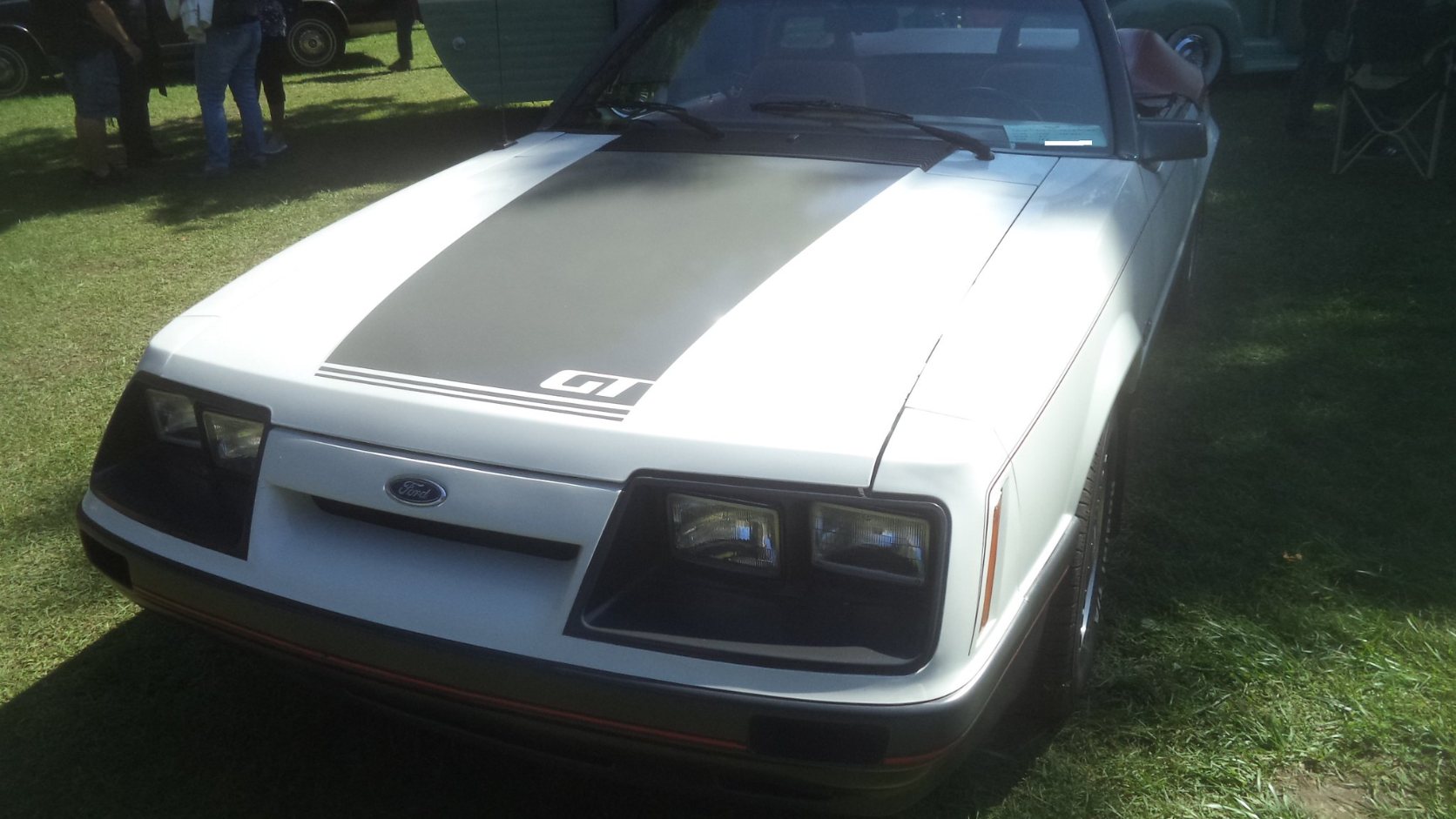 1 / 6
1986 Ford Mustang GT Convertible. Photo: Zytonits via Flickr, CC BY-SA 2.0.
Overview
The 1986 Ford Mustang was a year of engineering progress under a familiar body. Following the 1985 Ford Mustang, the car kept its coupe, hatchback and convertible body styles and its LX, GT and SVO trims, but the biggest change was under the hood of the V8 cars.
For 1986, Ford introduced sequential multiport electronic fuel injection on the 5.0-liter High Output V8, replacing the four-barrel carburetor. The new engine was rated at about 200 horsepower and 285 lb-ft of torque. Although peak horsepower dipped slightly, the fuel-injected 5.0 was smoother and more drivable, and it laid the foundation for the stronger engines that followed.
V8 models also received a stronger 8.8-inch rear axle, replacing the smaller 7.5-inch unit used with the smaller engines, and GTs got a 10.5-inch clutch. The turbocharged SVO continued at about 200 horsepower in its final model year, while the base 2.3-liter four and the 3.8-liter V6 remained available.
Sales rose sharply to 224,410 cars, showing how popular the Mustang had become again. The 1986 GT is the first Mustang with a fuel-injected 5.0, and the SVO’s last year makes it a collector favorite. For more background, see the third-generation Mustang history, or compare it with the original 1965 Ford Mustang.
1986 Mustang timeline
- 1984Earlier development
- 1985Previous model year
- 1986Featured model year
- 1987Continued evolution
Engine options
| Engine | Type | Horsepower | Torque | Fuel / induction | Notes |
|---|---|---|---|---|---|
| 2.3L (140 cu in) Lima | Inline-4 | Approx. 88 hp | Fuel injection | Base engine | |
| 2.3L (140 cu in) SVO Turbo | Turbocharged, intercooled inline-4 | Approx. 200 hp | Fuel injection, turbocharged | SVO only; final year | |
| 3.8L (232 cu in) Essex | V6 | Approx. 120 hp | Fuel injection | Optional V6 | |
| 5.0L (302 cu in) H.O. | V8 | Approx. 200 hp | Approx. 285 lb-ft | Sequential multiport fuel injection | New fuel-injected 5.0 |
Specifications at a glance
Production
224,410 total1986 Ford Mustang
Dimensions
Original colors
Color research in progress.
Performance
Buyer’s guide highlights
- Inspect the floor pans, torque boxes, strut towers and rear frame rails for rust and accident damage.
- Confirm a claimed GT or SVO with the VIN and paperwork.
- Check the fuel-injected 5.0 for vacuum leaks, sensor faults and poor idle.
- On SVO cars, inspect the turbo, intercooler and boost control, and ask for records.
- Check the 8.8-inch rear axle and clutch on V8 cars for noise and wear.
- Buy on condition and originality, since many Fox-body cars have been modified.
1. Start With Rust and Structure
Check the floor pans, torque boxes, strut towers and rear frame rails on any 1986 Ford Mustang, and look for accident repair.
2. Authenticate GTs and SVOs
Confirm the VIN engine code and trim with paperwork. The 1986 SVO was the final year of the model and carries unique body, suspension and engine parts.
3. Check the Fuel-Injected 5.0
The new multiport fuel injection is reliable, but aging sensors, vacuum lines and wiring can cause rough running. Look for a smooth idle and no warning lights.
4. Inspect the Drivetrain
Test the five-speed manual, clutch and 8.8-inch rear axle for noise or slipping, and check automatic cars for smooth shifts.
5. Buy the Best Example You Can
Original, well-documented 1986 GTs and SVOs are worth a premium over modified cars.
Values
1986 Ford Mustang values are strongest for original GT hatchbacks and final-year SVO models, while LX cars remain affordable.
Market references are research guides, not appraisals. Actual value depends on condition, originality, documentation, drivetrain, options, location and current buyer demand.