1987 Ford Mustang
The 1987 Ford Mustang introduced the Aero facelift, a new interior and a 225 hp 5.0 H.O. V8, while the V6 and SVO were dropped.
 1 / 6
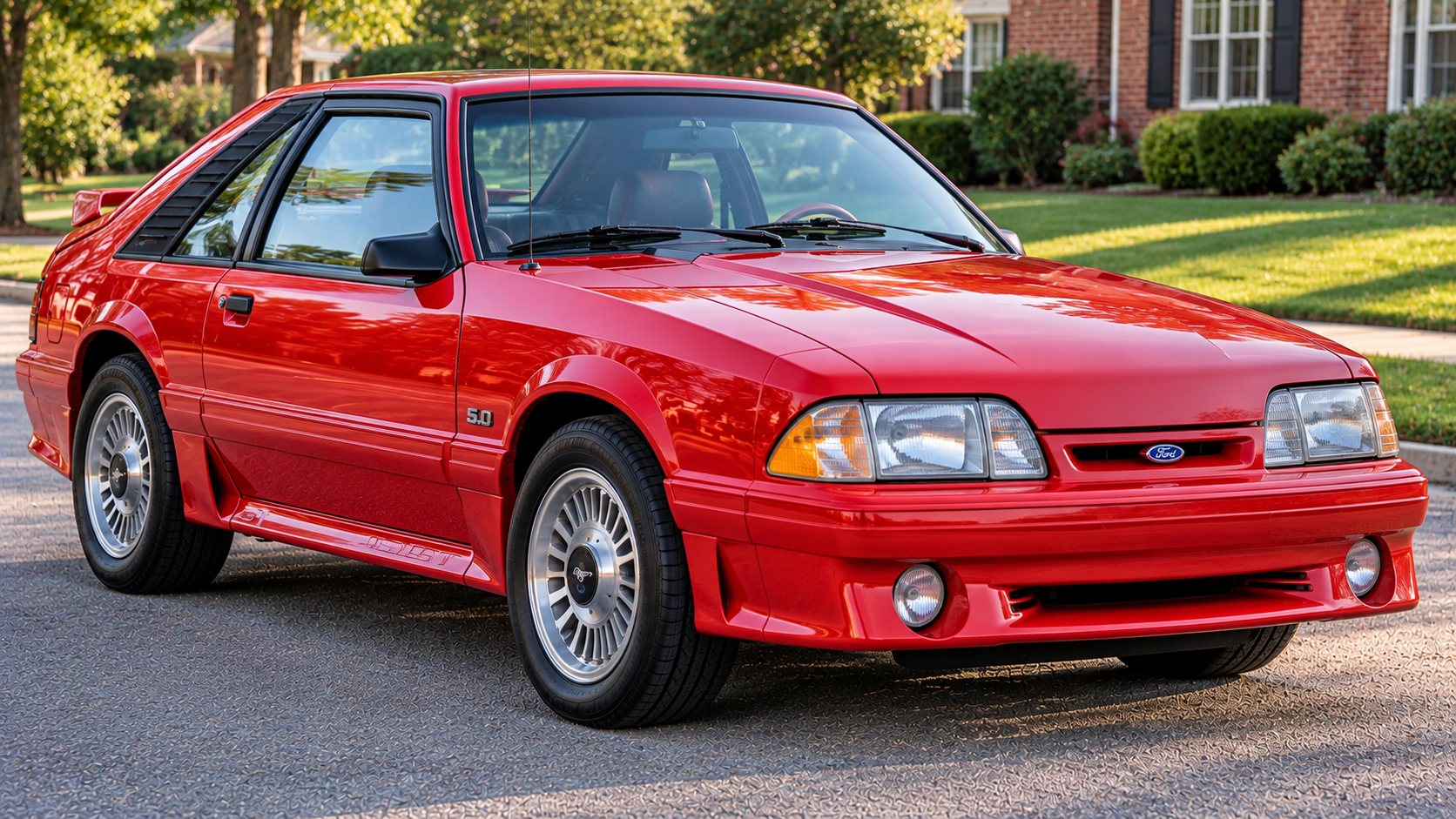
Illustration of a stock 1987 Mustang GT hatchback.
Overview
The 1987 Ford Mustang received the biggest update of the Fox-body era. Introduced in August 1986, the facelift replaced the look of the 1986 Ford Mustang with a smooth “Aero” front end, flush headlights and an all-new interior with a redesigned dashboard and center console.
The GT was the star of the lineup. It gained round fog lamps, aerodynamic lower body skirts, louvered “cheese grater” taillights and new 15-inch turbine-style wheels. The LX offered a cleaner look and could be ordered with the same 5.0 V8, which made the lightweight LX 5.0 coupe a favorite with performance fans.
Under the hood, the fuel-injected 5.0-liter High Output V8 was upgraded with new cylinder heads and was rated at about 225 horsepower and 300 lb-ft of torque. The only other engine was a fuel-injected 2.3-liter four, as the V6 option and the turbocharged SVO were discontinued. Buyers could choose a five-speed manual or a four-speed automatic.
Ford built 159,145 Mustangs for 1987. The styling and 225-horsepower 5.0 introduced this year would carry the Mustang through 1993, making 1987 the start of the most iconic Fox-body period. For more background, see the third-generation Mustang history, or compare it with the classic 1967 Ford Mustang.
1987 Mustang timeline
- 1985Earlier development
- 1986Previous model year
- 1987Featured model year
- 1988Continued evolution
Engine options
| Engine | Type | Horsepower | Torque | Fuel / induction | Notes |
|---|---|---|---|---|---|
| 2.3L (140 cu in) Lima | Inline-4 | Approx. 90 hp | Fuel injection | Base engine | |
| 5.0L (302 cu in) H.O. | V8 | Approx. 225 hp | Approx. 300 lb-ft | Sequential multiport fuel injection | GT and LX 5.0 engine |
Specifications at a glance
Production
- Notchback58,100 (36.5%)
- Hatchback80,717 (50.7%)
- Convertible20,328 (12.8%)
Dimensions
Original colors
Color research in progress.
Performance
Buyer’s guide highlights
- Inspect the floor pans, torque boxes, strut towers and rear frame rails for rust and accident damage.
- Confirm an LX 5.0 or GT with the VIN engine code and paperwork.
- Check GT body skirts, fog lamps and taillights, which can be damaged or missing.
- Look for modifications, as many Fox-body 5.0 cars have been heavily altered.
- Test the T-5 manual and clutch, and listen for rear axle noise.
- Buy on condition and originality, since stock 1987 cars are increasingly rare.
1. Start With Rust and Structure
Check the floor pans, torque boxes, strut towers and rear frame rails on any 1987 Ford Mustang, and look for signs of accident damage.
2. Confirm the Model
The GT and LX 5.0 are the most desirable versions. Check the VIN engine code, and look for original GT parts such as the skirts, fog lamps and louvered taillights.
3. Watch for Modifications
Many 5.0 Mustangs have been modified for performance. Original, unmodified cars are worth more, so check for aftermarket parts and ask about the car's history.
4. Inspect the Drivetrain
Test the five-speed manual and clutch, check automatic transmissions for smooth shifts, and listen for rear axle noise.
5. Buy the Best Example You Can
A clean, documented car is usually the best long-term buy, as prices for original Fox-body 5.0 cars keep rising.
Values
1987 Ford Mustang values are strongest for original, low-mileage GT and LX 5.0 cars, while four-cylinder models remain affordable.
Market references are research guides, not appraisals. Actual value depends on condition, originality, documentation, drivetrain, options, location and current buyer demand.