1989 Ford Mustang
The 1989 Ford Mustang switched the 5.0 V8 to mass air flow and marked the Mustang’s 25th anniversary with a small dashboard emblem.
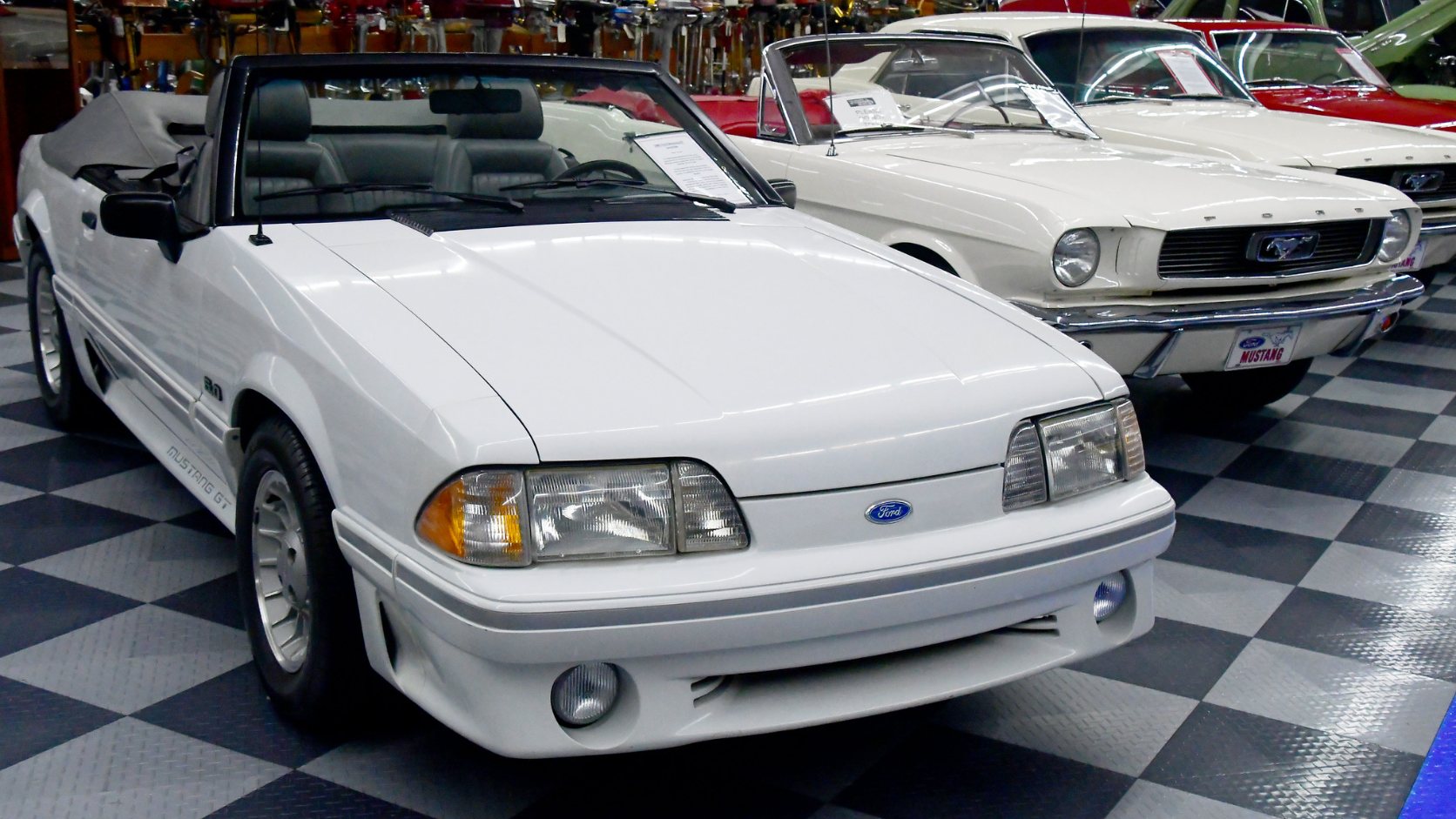 1 / 6
1989 Ford Mustang Convertible. Photo: Eric Friedebach via Flickr, CC BY 2.0.
Overview
The 1989 Ford Mustang arrived as the Mustang approached its 25th anniversary. It looked almost identical to the 1988 Ford Mustang, with the same Aero styling and LX and GT trims in notchback coupe, hatchback and convertible form, but Ford made an important change to the V8 engine management.
For 1989, the 5.0-liter High Output V8 switched from a speed-density system to a mass air flow system, which measures incoming air directly. California cars had received the change for 1988. The mass air system made the engine more tolerant of modifications, which helped make the 1989 and later 5.0 Mustangs popular with performance enthusiasts.
Ford marked the anniversary only quietly. Cars built from late March 1989 through the end of the 1990 model year received a small running-horse emblem on the passenger side of the dashboard, rather than a dedicated anniversary edition. The fuel-injected 2.3-liter four remained the base engine.
The 1989 Mustang sold well, with Ford building 188,559 cars, including 40,518 convertibles and 105,692 hatchbacks. It remains one of the most common and popular Fox-body years. For more background, see the third-generation Mustang history, or look back 25 years to the 1965 Ford Mustang.
1989 Mustang timeline
- 1987Earlier development
- 1988Previous model year
- 1989Featured model year
- 1990Continued evolution
Engine options
| Engine | Type | Horsepower | Torque | Fuel / induction | Notes |
|---|---|---|---|---|---|
| 2.3L (140 cu in) Lima | Inline-4 | Approx. 90 hp | Fuel injection | Base engine | |
| 5.0L (302 cu in) H.O. | V8 | Approx. 225 hp | Approx. 300 lb-ft | Sequential multiport fuel injection, mass air flow | New mass air flow system |
Specifications at a glance
Production
- Notchback42,349 (22.5%)
- Hatchback105,692 (56.1%)
- Convertible40,518 (21.5%)
Dimensions
Original colors
Color research in progress.
Performance
Buyer’s guide highlights
- Inspect the floor pans, torque boxes, strut towers and rear frame rails for rust and accident damage.
- Confirm an LX 5.0 or GT with the VIN engine code and paperwork.
- Check the mass air flow system and sensors for faults or poor running.
- Look for the 25th anniversary dash emblem on cars built from late March 1989.
- Inspect convertible tops, seals and floors for leaks.
- Buy on condition and originality, since many 5.0 cars have been modified.
1. Start With Rust and Structure
Check the floor pans, torque boxes, strut towers and rear frame rails on any 1989 Ford Mustang, and look for accident repair.
2. Confirm the Model and Engine
Check the VIN engine code for a genuine 5.0. Cars built after late March 1989 should have the small 25th anniversary emblem on the dashboard.
3. Check the Mass Air System
The new mass air flow system is reliable, but aging sensors and wiring can cause poor running. Look for a smooth idle and no warning lights.
4. Inspect Convertibles
Convertibles were popular in 1989. Check the top, rear window, seals and floors for leaks and rust.
5. Buy the Best Example You Can
Original, documented cars bring the best prices and hold their value better than modified ones.
Values
1989 Ford Mustang values are strongest for original GT and LX 5.0 cars, with low-mileage convertibles and notchbacks drawing the most interest.
Market references are research guides, not appraisals. Actual value depends on condition, originality, documentation, drivetrain, options, location and current buyer demand.