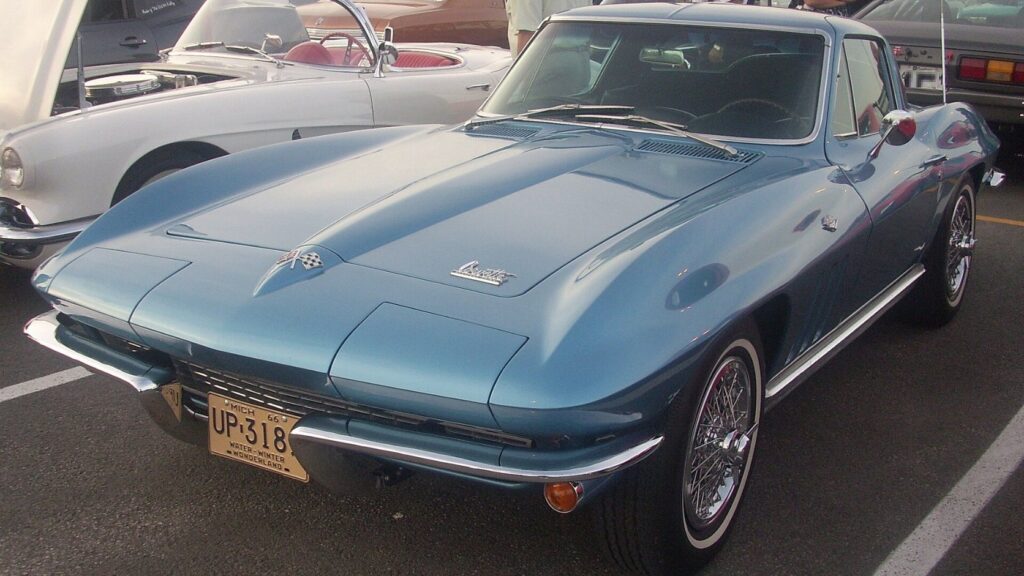
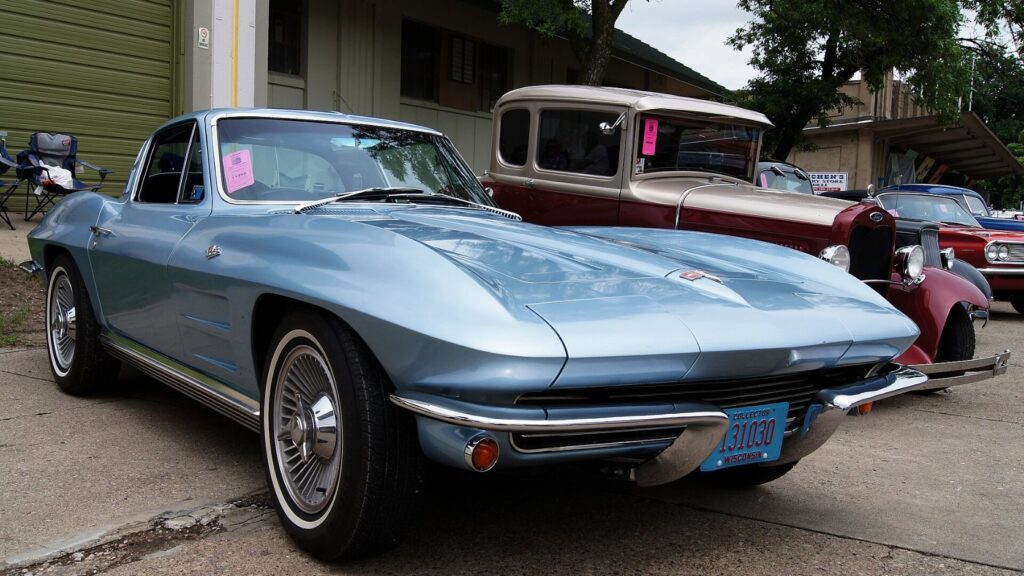
1965 Chevrolet Corvette
The 1965 Chevrolet Corvette Sting Ray gained four-wheel disc brakes and its first big-block, the 425 hp 396.
 1 / 6
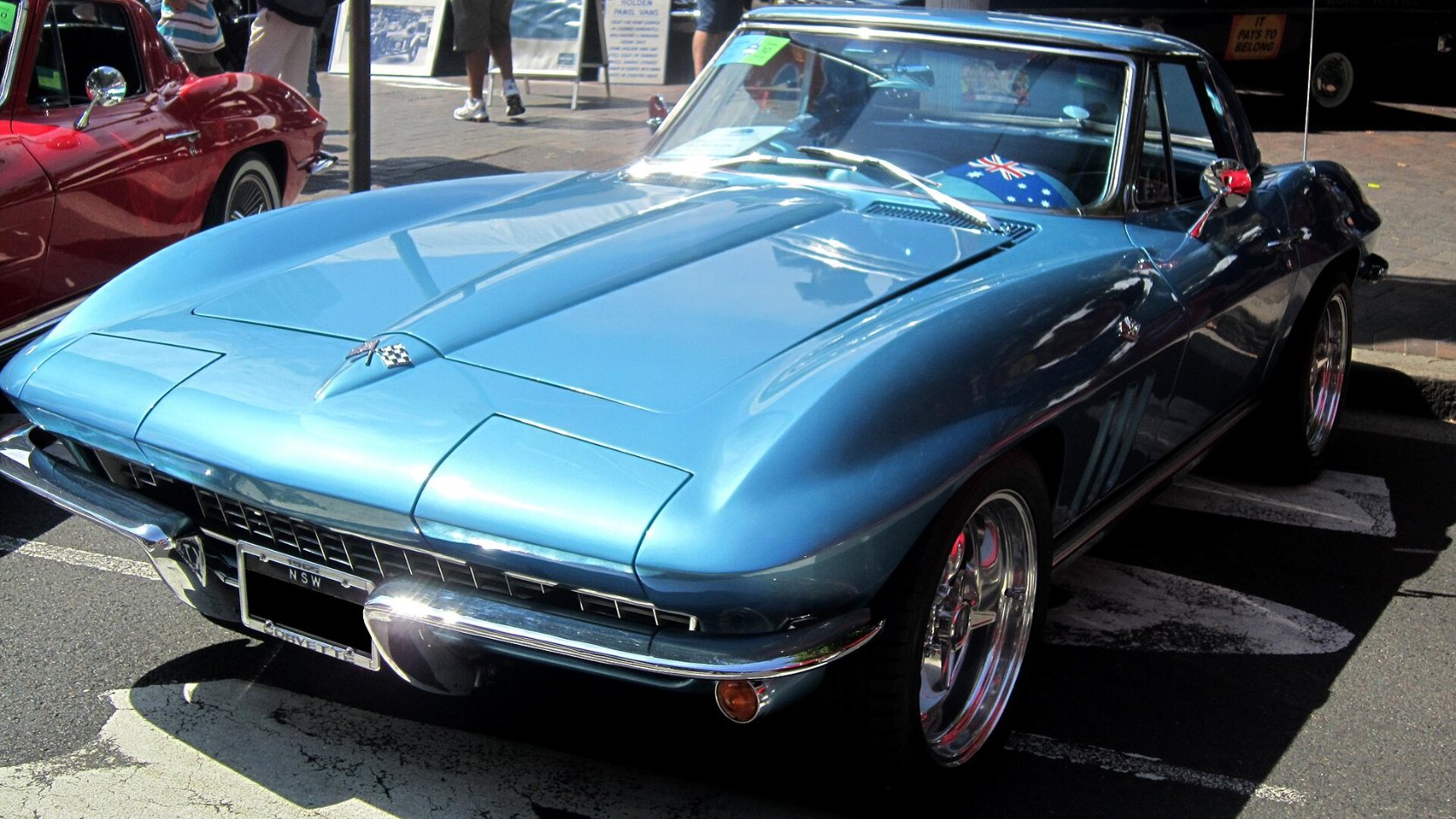
1965 Chevrolet Corvette Sting Ray Coupe. Photo: NRMA Motoring and Services from Sydney, Australia via Wikimedia Commons, CC BY 2.0.
Overview
The 1965 Chevrolet Corvette Sting Ray was the third year of the C2 generation and brought two major mechanical advances: standard four-wheel disc brakes and the first big-block V8 in a Corvette.
Compared with the 1964 Chevrolet Corvette, styling changes were small but easy to spot. The hood lost its recessed panels and became smooth, and the front fenders gained three functional vertical vents behind the wheels. Side-mounted exhaust pipes became a factory option.
The new disc brakes replaced the drums that had been a weak point of earlier Sting Rays. The 327 small-block range grew with the hydraulic-lifter 350-horsepower L79, and 1965 was the last year for the fuel-injected 327 until fuel injection returned to the Corvette in the 1980s.
In the spring of 1965, Chevrolet added the 396 cubic-inch big-block V8 rated at 425 horsepower, identified by a bulged hood. Production rose again to 23,562 cars, about two-thirds of them convertibles.
1965 Corvette timeline
- 1963Earlier development
- 1964Previous model year
- 1965Featured model year
- 1966Continued evolution
Engine options
| Engine | Type | Horsepower | Torque | Fuel / induction | Notes |
|---|---|---|---|---|---|
| 327 (base) | V8 | 250 hp | 350 lb-ft | 4-barrel carburetor | Standard engine |
| 327 (L75) | V8 | 300 hp | 360 lb-ft | 4-barrel carburetor | Optional |
| 327 (L79) | V8 | 350 hp | 360 lb-ft | 4-barrel Holley carburetor | New for 1965, hydraulic lifters |
| 327 (L76) | V8 | 365 hp | 350 lb-ft | 4-barrel Holley carburetor | Solid lifters |
| 327 (L84) | V8 | 375 hp | 350 lb-ft | Rochester mechanical fuel injection | Final year for fuel injection |
| 396 (L78) | V8 | 425 hp | 415 lb-ft | 4-barrel Holley carburetor | First Corvette big-block, mid-year |
Specifications at a glance
Production
- Convertible15,376 (65.3%)
- Coupe8,186 (34.7%)
Dimensions
Original colors
Color research in progress.
Performance
Buyer’s guide highlights
- Inspect the steel frame and the steel "birdcage" around the cabin for rust.
- Check the fiberglass body for cracks, poor panel fit and accident repair.
- Verify a claimed 396 or fuel-injected car with engine stampings and paperwork.
- Check the disc brake calipers for leaks and corrosion, a known issue on cars that sit.
- Check the independent rear suspension, trailing arms and wheel bearings.
- Buy on originality and paperwork rather than fresh paint.
1. Check the Frame and Birdcage
On any 1965 Chevrolet Corvette, look for rust in the frame, especially the rear kick-ups, and in the steel structure around the windshield and door openings.
2. Inspect the Fiberglass
Look for stress cracks, uneven gaps and visible bonding seams. Check that a big-block car has the correct bulged hood.
3. Verify the Drivetrain
The 396 and the fuel-injected 327 bring the highest prices, so check engine stampings, original components and supporting paperwork.
4. Check the Brakes
Early Corvette disc brake calipers can corrode and leak if the car is stored for long periods. Many have been rebuilt with stainless-steel sleeves, which is a good sign.
5. Buy the Best Example You Can
A documented car with its original drivetrain is worth paying more for and is easier to resell.
Values
1965 Chevrolet Corvette values are highest for documented 396 and fuel-injected cars; small-block convertibles and coupes with base engines are the most affordable.
Market references are research guides, not appraisals. Actual value depends on condition, originality, documentation, drivetrain, options, location and current buyer demand.