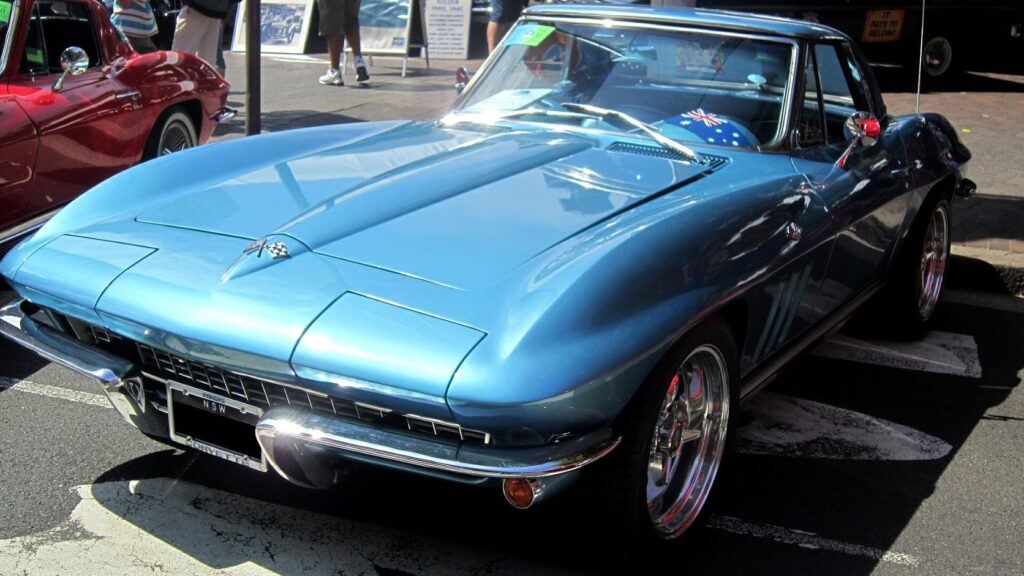
1966 Chevrolet Corvette
The 1966 Chevrolet Corvette Sting Ray brought the 427 big-block with up to 425 hp and record C2 sales.
 1 / 6
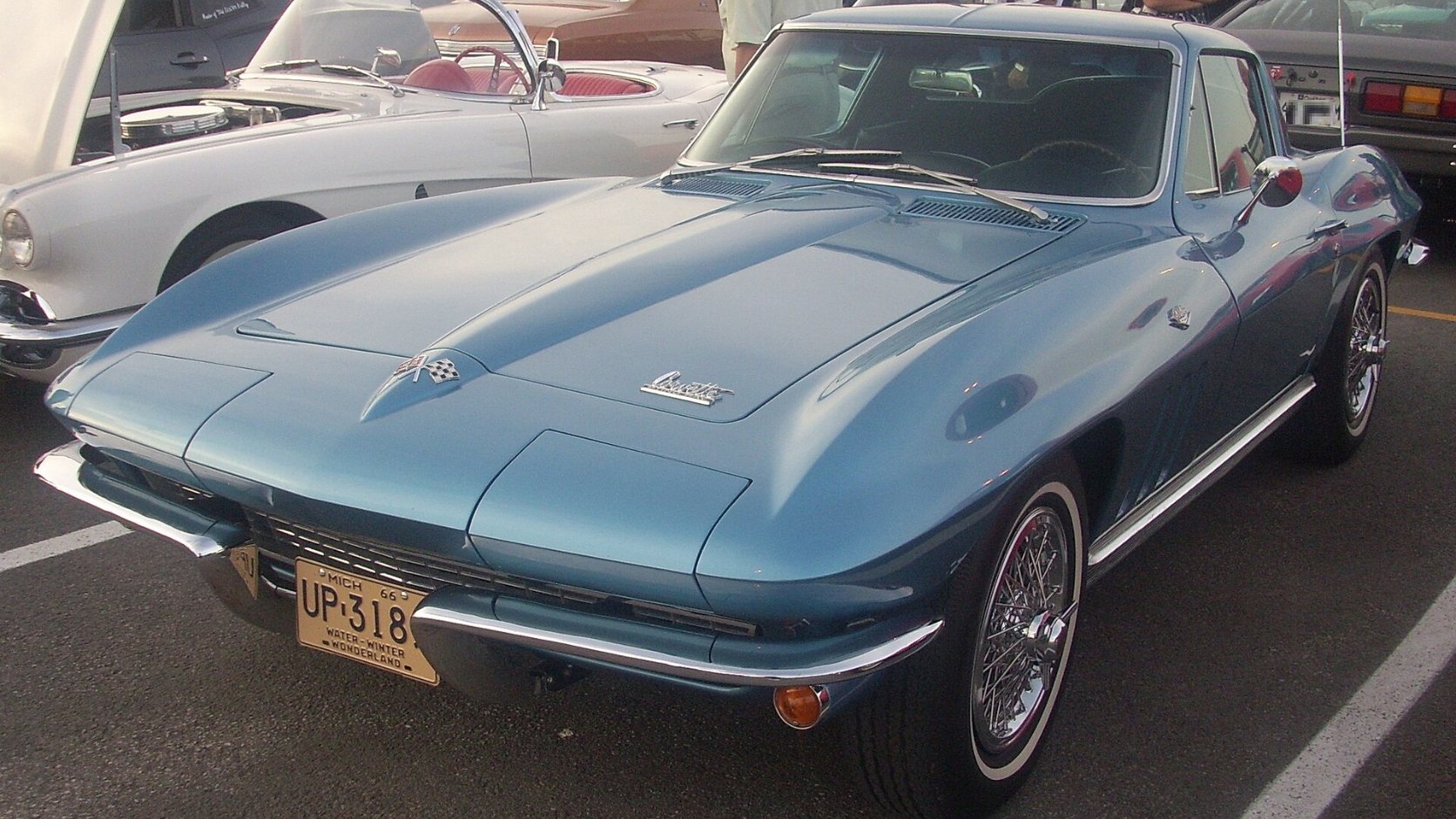
1966 Chevrolet Corvette Sting Ray Coupe. Photo: Bull-Doser via Wikimedia Commons, Public domain.
Overview
The 1966 Chevrolet Corvette Sting Ray was the fourth year of the C2 generation and the first Corvette with the 427 cubic-inch big-block V8. It replaced the 396 that had been offered for only a few months in the 1965 Chevrolet Corvette.
Two versions of the 427 were available: a 390-horsepower engine with hydraulic lifters and a 425-horsepower solid-lifter engine. Big-block cars again wore a bulged hood. The small-block range was simplified to two 327s, a 300-horsepower base engine and the 350-horsepower L79, and fuel injection was no longer offered.
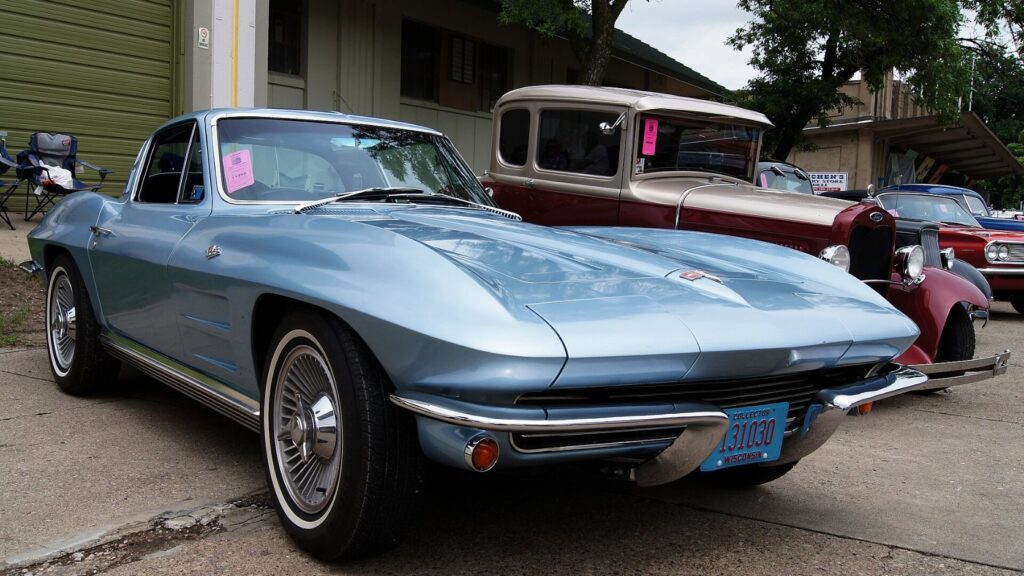
Styling changes were minor. The grille changed to an egg-crate pattern, the coupe lost the vents in its roof pillars, backup lights became standard and a Corvette script appeared on the hood. Inside, seats were revised and headrests became optional.
Sales kept climbing, to 27,720 cars, the highest total of any Sting Ray year so far. As before, convertibles outsold coupes by a wide margin.
1966 Corvette timeline
- 1964Earlier development
- 1965Previous model year
- 1966Featured model year
- 1967Continued evolution
Engine options
| Engine | Type | Horsepower | Torque | Fuel / induction | Notes |
|---|---|---|---|---|---|
| 327 (base) | V8 | 300 hp | 360 lb-ft | 4-barrel carburetor | Standard engine |
| 327 (L79) | V8 | 350 hp | 360 lb-ft | 4-barrel Holley carburetor | Optional |
| 427 (L36) | V8 | 390 hp | 460 lb-ft | 4-barrel carburetor | Hydraulic lifters |
| 427 (L72) | V8 | 425 hp | 460 lb-ft | 4-barrel Holley carburetor | Solid lifters |
Specifications at a glance
Production
- Convertible17,762 (64.1%)
- Coupe9,958 (35.9%)
Dimensions
Original colors
Color research in progress.
Performance
Buyer’s guide highlights
- Inspect the steel frame and the steel "birdcage" around the cabin for rust.
- Check the fiberglass body for cracks, poor panel fit and accident repair.
- Verify a claimed 427 car with engine stampings, correct hood and paperwork.
- Check disc brake calipers for leaks and corrosion.
- Check the independent rear suspension, trailing arms and wheel bearings.
- Buy on originality and paperwork rather than fresh paint.
1. Check the Frame and Birdcage
On any 1966 Chevrolet Corvette, look for rust in the frame, especially the rear kick-ups, and in the steel structure around the windshield and door openings.
2. Inspect the Fiberglass
Look for stress cracks, uneven gaps and visible bonding seams, and make sure a big-block car has the correct bulged hood.
3. Verify 427 Cars
Big-block cars are worth far more than small-block cars, and conversions exist. Check the engine stamping, date codes and supporting documents.
4. Check Brakes and Suspension
Corroded brake calipers, worn trailing arm bushings and tired rear wheel bearings are common on cars that have sat.
5. Buy the Best Example You Can
With the highest production of the early C2 years, there is good choice. Hold out for a documented car with its original drivetrain.
Values
1966 Chevrolet Corvette values are highest for documented 427/425 hp cars, followed by 427/390 hp cars; 327 convertibles and coupes are the most affordable.
Market references are research guides, not appraisals. Actual value depends on condition, originality, documentation, drivetrain, options, location and current buyer demand.