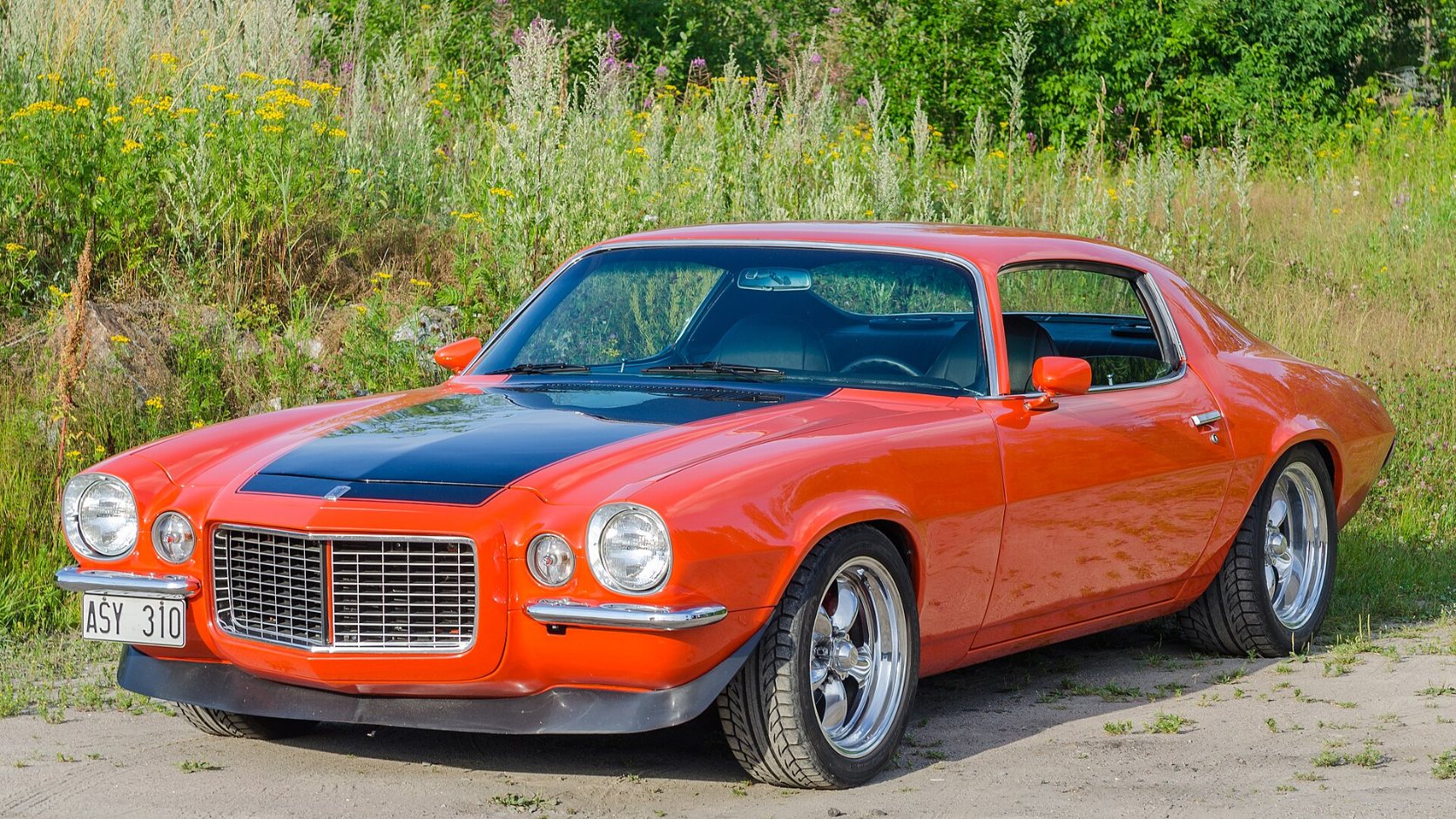
1970 Chevrolet Camaro
The 1970 Chevrolet Camaro introduced the second generation with fastback styling, the RS split bumper and the LT-1 Z28.
 1 / 6
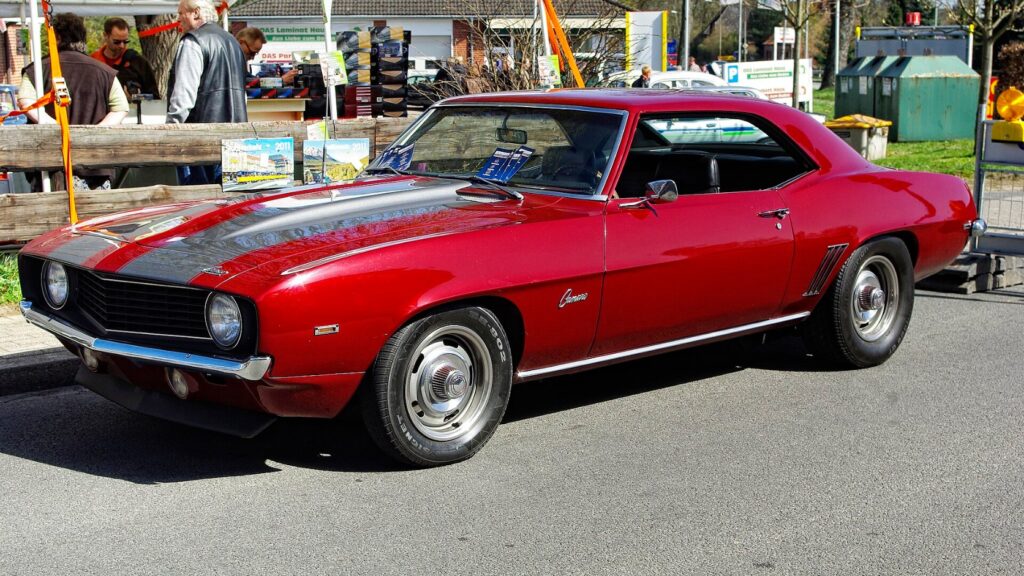
1970 Chevrolet Camaro. Photo: Arild Vågen via Wikimedia Commons, CC BY-SA 4.0.
Overview
The 1970 Chevrolet Camaro launched the second generation of Chevrolet’s pony car. Production delays meant it did not reach showrooms until late February 1970, which is why it is often called the 1970½ Camaro. Until then, dealers kept selling the 1969 Chevrolet Camaro.
The new car was longer, lower and wider, with a fastback roofline and European-influenced styling. It was offered only as a coupe; the convertible was gone. The Rally Sport package gave the car its best-known face, with a body-colored nose surround and small split bumpers on either side of the grille.
The Z28 changed character. The high-revving 302 was replaced by the 350 cubic-inch LT-1 V8 rated at 360 horsepower, and for the first time it could be ordered with an automatic transmission. The SS continued with a 300-horsepower 350 or the big-block still badged as a 396, although it now displaced 402 cubic inches.
Because of the short model year, production was 124,901 cars, about half the 1969 total. The basic second-generation body would stay in production through 1981.
1970 Camaro timeline
- 1968Earlier development
- 1969Previous model year
- 1970Featured model year
- 1971Continued evolution
Engine options
| Engine | Type | Horsepower | Torque | Fuel / induction | Notes |
|---|---|---|---|---|---|
| 250 Turbo-Thrift | I6 | 155 hp | 235 lb-ft | 1-barrel carburetor | Base engine |
| 307 Turbo-Fire | V8 | 200 hp | 300 lb-ft | 2-barrel carburetor | Base V8 |
| 350 Turbo-Fire (L65) | V8 | 250 hp | 345 lb-ft | 2-barrel carburetor | Optional |
| 350 Turbo-Fire (L48) | V8 | 300 hp | 380 lb-ft | 4-barrel carburetor | SS 350 |
| 350 (LT-1) | V8 | 360 hp | 380 lb-ft | 4-barrel Holley carburetor | Z28; 8,733 built |
| 396 Turbo-Jet (L34) | V8 | 350 hp | 415 lb-ft | 4-barrel carburetor | SS 396, 402 cubic inches |
| 396 Turbo-Jet (L78) | V8 | 375 hp | 415 lb-ft | 4-barrel Holley carburetor | Rare top option |
Specifications at a glance
Production
124,9011970 Chevrolet Camaro
Dimensions
Original colors
Color research in progress.
Performance
Buyer’s guide highlights
- Check the rear quarters, trunk floor, floor pans, rocker panels and rear frame rails for rust.
- Look at the lower front fenders, the cowl and around the rear window for corrosion.
- Verify a real Z28 or SS with engine codes and paperwork; the VIN does not identify them in 1970.
- Confirm genuine RS split-bumper parts, since many standard cars have been converted.
- Check the front subframe and its body mounts.
- Buy on structure and documentation, not paint.
1. Check for Rust
Inspect any 1970 Chevrolet Camaro for rust in the rear quarter panels, trunk floor, floor pans, rocker panels, lower fenders and around the rear window.
2. Authenticate Z28 and SS Cars
The 1970 VIN does not show the Z28 or SS package. Look for the correct LT-1 or big-block engine codes, a 12-bolt rear axle and original documentation.
3. Check the RS Front End
The split-bumper Rally Sport nose is highly desirable and often added later. Check for the correct RS parts and supporting paperwork if the car is sold as an original RS.
4. Inspect the Subframe and Suspension
Check the bolt-on front subframe and mounts for rust and accident damage, and look at rear leaf springs and bushings.
5. Buy the Best Example You Can
Early second-generation cars rusted badly, so truly solid bodies are less common than first-generation survivors. Pay for the best body you can find.
Values
1970 Chevrolet Camaro values are highest for documented Z28 LT-1 cars, especially with the RS package, and for SS 396 cars; six-cylinder and base V8 coupes are the most affordable.
Market references are research guides, not appraisals. Actual value depends on condition, originality, documentation, drivetrain, options, location and current buyer demand.