
Owners of the Ford Explorer have reported an issue that seems to crop up across various model years: a crack developing near the rear hatch.
This problem appears to be prevalent enough that it has caught the attention of both vehicle owners and Ford itself.
We’re aware that such a defect is not just a cosmetic concern; it may also indicate underlying structural issues, potentially leading to further damage if left unaddressed.
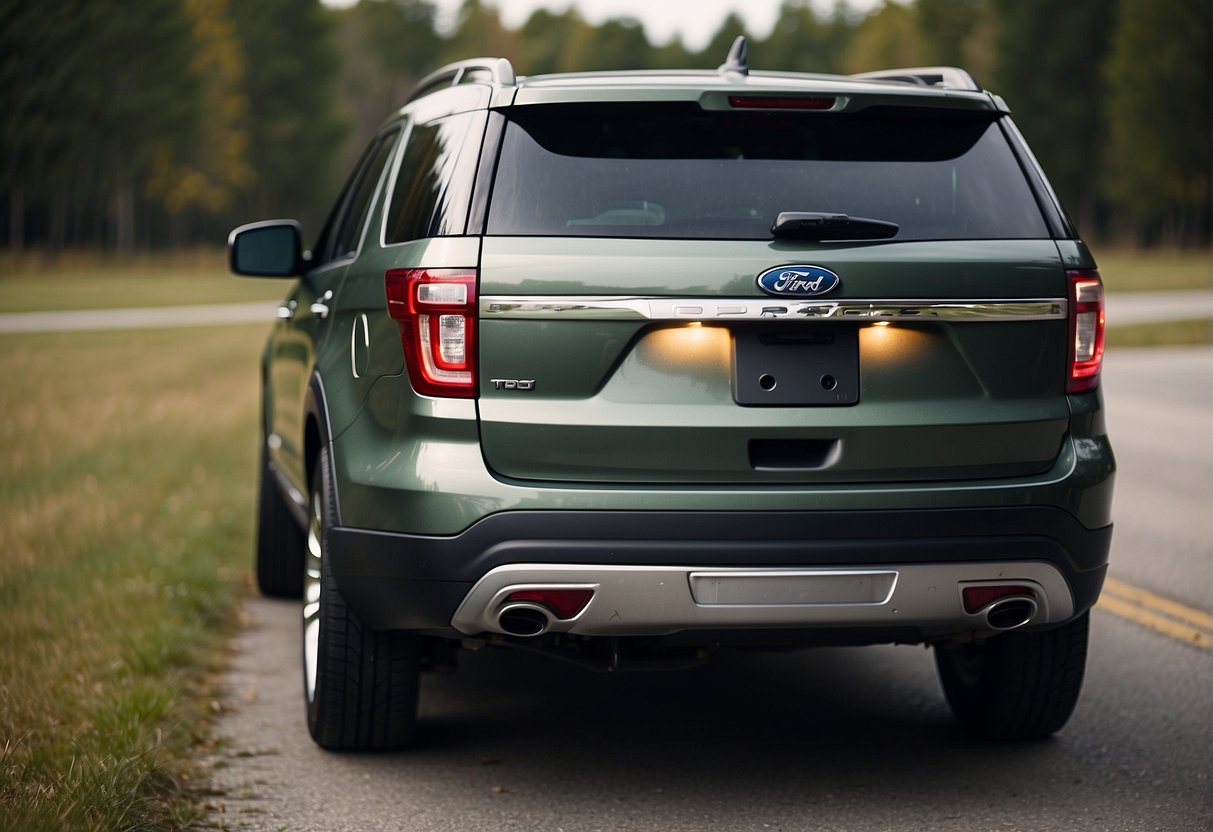
We understand that vehicle maintenance and integrity are pivotal, especially when it pertains to something as essential as the rear hatch of an SUV.
The Ford Explorer, being a popular choice among families and adventurers alike, demands reliability.
While the occurrence is widespread, it’s comforting to know that solutions exist to rectify the cracked rear hatch issue.
In our experience, these cracks can often be traced back to a variety of causes such as material fatigue, excessive pressure on the rear hatch, or even environmental factors.
The repairs can range from simple DIY fixes to more complex procedures that might require professional assistance.
Ford has also issued service procedures for replacing the problematic trim without damaging the rear liftgate glass, signaling their commitment to addressing this concern for Ford Explorer owners.
JUMP TO TOPIC
Identifying Common Issues with Ford Explorer Models
When it comes to the durability and integrity of Ford Explorer models, specific issues surface repeatedly, particularly concerning the rear hatch, body and paint integrity, and the mechanical aspects of the transmission and engine.
We have noticed these across various years and models, which necessitates a closer look.
Cracked Rear Hatch
The issue of the cracked rear hatch, especially along where the hatch meets the vehicle body, has been a persistent problem.
Our observations confirm this defect is not merely cosmetic but could hint at underlying structural weaknesses.
Particularly, the 2003 and 2004 Ford Explorer models are prone to these cracks.
This manifests as a vertical split on the panel below the rear window, often caused due to stress and a manufacturing defect in the metal.
Paint and Body Concerns
Owners frequently bring up deteriorating paint and rust, primarily on the hood and tailgate.
This is not only an aesthetic concern but also indicates potential body corrosion, leading to leaks or further damage over time.
Transmission and Engine Problems
For those who are mechanically savvy, it’s well-understood that the Transmission can be a sore spot.
| Year/Model | Common Transmission Issue | Typical Repair |
| 2003 Ford Explorer | Jolting transmission, difficulty in gear engagement | Comprehensive overhaul or replacement |
| 2004 Ford Explorer | Transmission lunging and irregular shifting | Solenoid or control module replacement |
Owners have reported issues like difficulty engaging gears, unexpected lunging, and outright transmission failure.
These problems often necessitate a visit to the mechanic or a body shop for significant repairs.
Moreover, older models like the 2003 and 2004 are particularly susceptible, highlighting the importance of vigilance and regular maintenance checks.
When a Ford Explorer develops a crack near the rear hatch, we have several avenues to consider for repairs or replacements.
It’s crucial to evaluate different repair environments, understand potential warranty coverage, and explore aftermarket solutions.
Dealership vs. Independent Repair Shop
Independent Repair Shop: These shops can offer more competitive pricing and faster service times.
However, they may not always have access to specialized replacement panels, and their familiarity with specific Ford, Mercury, or Lincoln service procedures may vary.
Understanding Warranty and Recalls
Aftermarket Options for Replacement Parts
Finding aftermarket parts is an alternative:
- Replacement Panel: We can source aftermarket panels that may fit as well as OEM parts.
- Quality: Aftermarket parts vary in quality, so it’s imperative to choose reputable brands.
- Cost: Generally, these options are more budget-friendly than dealership parts.
Evaluating the Longevity and Service Life of Ford Explorers
When assessing Ford Explorers, it’s crucial to consider factors like mileage, maintenance, and preventive care. These elements collectively influence the vehicle’s service life.
Mileage and Durability
Ford Explorers are renowned for their potential to surpass 200,000 miles with meticulous maintenance.
Specific models, particularly the 2002, 2003, and 2004 Ford Explorers, have exhibited a predilection for certain issues, which can potentially shorten their service life.
However, a well-maintained Explorer from recent years, including 2021, 2022, and 2023, has shown improvements in terms of durability.
Common Maintenance Tips
- Regular oil changes
- Timing belt checks
- Transmission fluid replacement
- Tire rotation and alignment
Following the manufacturer’s maintenance schedule is essential.
This involves routine inspections and replacement of wear-and-tear parts, which helps prevent larger issues.
Preventive Measures for Long-term Care
Implementing preventive measures extends the Explorer’s longevity. Below are strategic approaches:
| Preventive Action | Benefit |
| Frequent Inspections | Early Problem Detection |
| Use of Quality Parts | Enhanced Performance |
| Awareness of Model-Specific Issues | Targeted Care Strategies |
Regular check-ups specifically aimed at known issues in certain model years, such as the rear hatch crack in some early-2000s models, are part of the proactive care.