
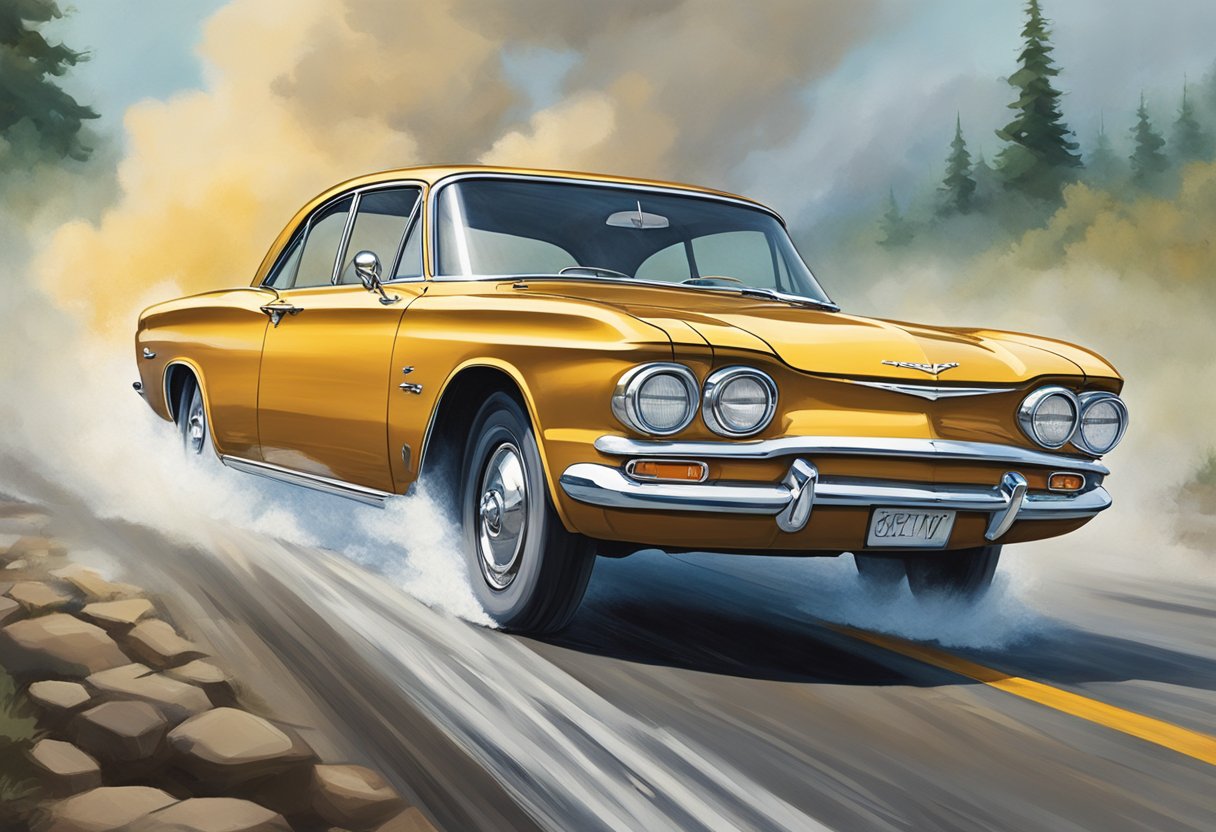
When we look back in automotive history, the Chevrolet Corvair stands out—not for the reasons a car might hope to. Introduced in the late 1950s as a response to the surge of compact European imports, the Corvair broke the mold with its rear-engine layout and air-cooled flat-six engine. Handful is a modest word for it; the setup was unusual for American cars of the time. While innovation is the heart of progress, it did come with its own set of challenges. The Corvair’s design quirks quickly raised questions about its on-road behavior.
put the spotlight squarely on the Corvair. The rear-engine design led to a weight distribution that was not quite ordinary, contributing to handling characteristics that could catch drivers by surprise. Nader’s scrutiny threw a wrench in the works, propelling consumer awareness about automotive safety and putting the auto industry under the microscope. It was a pivotal moment that ultimately led to higher safety standards in the production and engineering of American cars.
We must consider that the rise of the Corvair came during a period when the auto industry was less regulated and safety features we take for granted today were virtually non-existent. The questions around the Corvair’s safety were amplified amidst growing public concern, a factor that played into Chevy’s decision to make adjustments. Despite a federal study in 1972 that found earlier models of the Corvair comparable in safety to its contemporaries, the damage was done—the Corvair’s image had been tarnished by the flames of controversy.
JUMP TO TOPIC
The Chevrolet Corvair’s History and Design
We’re about to take a walk down memory lane with a vehicle that had a certain je ne sais quoi: the Chevrolet Corvair. From the swinging ’60s era, it stood out as a unique American compact car with a personality that was as rear-engined as its mechanics.
Early Development and Market Impact
The Corvair dived onto the scene in 1960, a time when American roads were feeling the European influence. It was Chevrolet’s innovative ace, designed under the leadership of Ed Cole, who was something of a wizard in the auto world. 🛠️ Ed Cole’s Vision: Ahead of time, Cole imagined a compact car that could stand up to the fuel-efficient and smaller models across the pond. The Corvair was going to break the mold with its air-cooled, rear-engine design that was virtually unheard of in the US market.
Where did it shine? Well, think about those cute European cars scuttling about. They were making quite the entrance, but the Corvair rolled up as a confident domestic alternative. As far as trim lines go, the Corvair lineup ticked all the boxes—from the practical sedans to the slick coupes. Talk about versatility!
The Corvair Monza and Its Cultural Significance
Now let’s talk about the Corvair Monza—oh boy, did it leave its tire marks in history! It wasn’t just a car; it became an emblem of American automotive innovation. 🚗 The Monza Effect: It turned heads with its sporty flair and was the apple of the youth’s eye, symbolizing freedom and adventure at a time when those words meant everything.
With its release, the Corvair Monza coupe fostered something like a cult following—we’re talking die-hard collectors and enthusiasts who still, to this day, gather to share their passion for this Chevrolet classic. It blurred the lines between an everyday car and one that belonged on a poster on your bedroom wall.
Engineering Controversies and Safety Concerns
The Chevrolet Corvair’s design was unique but fraught with issues that raised eyebrows and alarms among consumers and engineers alike. Let’s get under the hood of this story.
The Technical Aspects of Corvair’s Handling Problems
Our little Corvair packed quite the punch with its rear-mounted, air-cooled engine, but it was a double-edged sword. 🗡️ The swing-axle rear suspension that was supposed to offer a smooth ride ended up contributing to a host of handling problems. You see, the weight distribution led to significant traction variations, sometimes resulting in oversteer—frightening, right? 🚗💨 Especially if your tire pressure wasn’t spot on, which, spoiler alert, was often advised to be based more on comfort than safety. A recipe for troubled handling, if you ask us.
The high-octane debacle eventually led to General Motors making crucial alterations to the Corvair’s suspension system, all in an effort to defuse the handling hand grenade they had on their hands.
Ralph Nader’s Criticism and the Aftermath
Remember Ralph Nader? 📚 His influential book, “Unsafe at Any Speed” threw a spotlight on the Corvair’s safety like a deer in headlights. Only one chapter in this tome was dedicated to the Corvair, but that was enough to accelerate change in automotive safety.
The result? General Motors found themselves skidding on thin PR ice and had to demonstrate their pivot towards safety. Engineers scurried to the drawing board, and the little Corvair’s redesign spawned a safer, more stable vehicle—not that it could reverse its rep. This kerfuffle didn’t just bruise GM’s ego; it rumbled all the way to Congress, culminating in the National Traffic and Motor Vehicle Safety Act. 🚨
Because of that, automotive safety standards shifted gears; something we should all be thankful for. A silver lining, wouldn’t you say? 🌡️⚙️
The Corvair’s Legacy in Automotive History
When we reminisce about the Chevrolet Corvair, we’re diving into an era that sparked massive change in the automotive industry. It’s an icon that tells a story of innovation, controversy, and evolution within American cars.
Collectibility and Restoration in Modern Times
The Corvair Monza breathed new life into the compact car market with its Monza coupe, and even today, it has a special spot in the hearts of enthusiasts. People draw parallels between the Corvair and the Ford Mustang—an innovation often attributed to automotive legend Lee Iacocca. Although the Corvair’s production ceased as the Nova gained popularity, true aficionados appreciate the Corvair’s uniqueness—whether it’s a Corsa or a station wagon. Hagerty even recognizes the Corvair for its collectibility.
| Model | Features | Restoration Appeal |
| Corvair Monza | Turbocharged Engine, Sleek Design | High Performance, Style |
| Corvair 500/700 | Simplicity, Economy | Authentic Vintage Experience |
| Corvair Station Wagon | Practicality, Space | Family Road Trip Memories |
| Corvair Corsa | Sporty Features, Higher Power | Racing Heritage |
With forums, clubs, and shows dedicated to this unique Chevrolet make, it’s clear we’re not the only ones keen on keeping the Corvair’s spirit on the road. Whether it’s the thrill of the hunt for parts, the satisfaction of bringing back a glossy finish, or the camaraderie found in the Corvair community, there’s a sense of pride that comes with restoring one of these beauties. It’s not just about the car—it’s about preserving a pivotal chapter in our automotive history. And let’s be honest, making heads turn with a classic that’s back and running? That’s just the cherry on top. 🚗💨